

STORIES
Rope a tale for the times
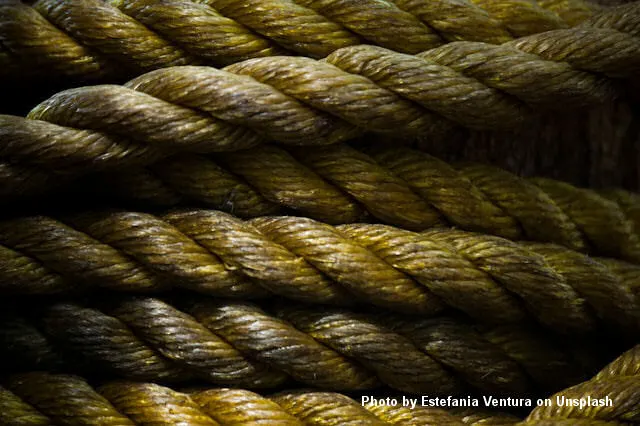
When Jentzey bought up the old Barnes property, nobody paid much attention. There were the usual rumors and raised eyebrows that accompanied the arrival of any outsider. They’d seen retirees and other escapees from the corporate world come to carve out a simpler life close to the earth, hippies intent on founding Utopian communities, religious zealots and their cult followers seeking to escape the notice of the authorities, agronomists putting their organic farming fantasies to the test, and businessmen with get rich quick schemes, eager to exploit the land. Most of them had come and gone, all those weirdos from the outside with no knowledge of farming or how to make a living off the land. Sure, there were remnants of those populations that stayed behind, but not enough to amount to much. The holdouts tended to dislike each other even more than they disliked the folks in control, so they didn’t associate with one another or affect the character of the region much. Things remained as they were and always would be. No citified newcomers with newfangled ideas were going to take it over.
Nobody knew what category of back-to-the lander Jentzey was. No one, it seemed, had actually met the man, and he remained something of a mystery. Various workers—friends, hangers-on, employees, contractors—nobody knew who they were, came and went. They rushed around measuring, surveying, excavating, remodeling and God knew what else, but they kept to themselves and didn’t mix with the locals, which suited the locals just fine. Their activity lasted so long that people forgot all about Jentzey himself until the afternoon he arrived and moved into his refurbished home. He’d barely settled in before sending out invitations to all the most prominent people for an open house gathering that very weekend.
Most newcomers avoided the locals, so what was seen as a naïve ploy to introduce himself to the wealthiest and post powerful people in the establishment was met by amusement. Talking among themselves, they agreed that such a bold attempt to insert himself into the community should be met with derision, which would be accomplished by making sure nobody turned up at the event. Accordingly, they felt abashed to see that their peers decided, just as they themselves had, to attend the party despite their assurances that they wouldn’t. When they entered the house, they were further embarrassed about showing up in very casual dress, as if deciding to stop by on a passing whim, rather than planning to attend.
They were taken aback by the grandeur of the house. That’s what all the labor was about. They had transformed the massive but unassuming building into a mansion replete with glittery and expensive-looking furnishings. Sure, it was gaudy and in bad taste, but nevertheless impressive. Even while they laughed inwardly at the gaucheness of the décor, they couldn’t help running their fingers over the smooth surfaces. “Here’s a guy,” many of them thought, “who has more money than what he knows what to do with, and it wouldn’t hurt to cozy up to him.”
Jentzey himself fit perfectly with the weird furnishings of the house. No one had seen the likes of him before, and there were smirks and even a few guffaws, clumsily disguised as coughs, as the guests greeted him. Far from being casually dressed, he was costumed in the most outlandish fashion. He wore a sleek black cape with a crimson lining, an impossibly ruffled shirt and high black boots shined to a mirror finish. What made his appearance even odder was his short stature and repulsively ugly face. It was one of those faces people feel uncomfortable looking at because it was so disfigured. The man seemed completely unaware of what a strange figure he cut, and greeted his guests cheerily, unmindful of the way they poked each other in the ribs as they gathered around him.
His manners were atrocious. He said whatever popped into his head, regardless of how offensive or inane, and if he wanted something, he grabbed it without hesitation or embarrassment. He snatched a piece of cake off the plate of a guest as she held it in front of her while she chatted with him, and stuffed it into his mouth. His action was so rude and crude that it elicited embarrassed titters of laughter rather than disapproval. It must have been a joke, they thought. Nobody behaves like that.
In the following weeks and months, Jentzey’s unusual appearance and outrageous behavior became a source of entertainment. People looked forward to his next gaffe, or what would have been considered a gaffe if anyone else did it, but which just endeared him to his amused peers. Instead of working against him, his oddball style facilitated his acceptance. Even though everyone laughed at him behind his back, and sometimes to his face, they enjoyed his buffoonery. Like a court jester he turned serious matters into travesties to be laughed at.
It didn’t hurt that he appeared to have plenty of money to throw around and entertained lavishly. The open house was just the first of many festivities he organized. He was adept at procuring for people things they desired but couldn’t acquire on their own, leaving many in his debt. It paid to be his friend, or at least to pretend to be, because of the benefits it brought. Some claimed he was generous, while others asserted he was simple-minded. There was a small contingent of people that warned he was diabolical, but they were ignored for the most part because they couldn’t point to anything terrible he had done. Being entertaining wasn’t a sin, was it? If there was something not quite wholesome about Jentzey, maybe even decidedly nasty, and if it rubbed off a bit on those who associated with him, it was more than compensated for by his largesse.
One of Jentzey’s stranger projects was growing hemp. He didn’t grow it himself, but convinced some farmers to grow it for him. He contracted to buy the crop from them when they harvested it for a ridiculously high price. The savvy farmers knew it was a losing proposition for him, but if that’s the way he wanted to waste his money, they might as well take advantage of his madness before he squandered it all. There was a bumper crop that first season and the farmers he had enlisted had never made such a huge profit for so little work. Nobody knew how Jentzey disposed of the crop, but he did, and apparently made out well for himself. When he offered similar terms the following year, not quite as generous, but not bad, more farmers jumped on board, and by the time the third year rolled around, hemp was the only crop grown in the whole region, even though the profit margin had slipped a little further.
Apparently, the hemp was being shipped abroad, but nobody knew for what purpose. Farmers joked they were getting “money for dope, money for rope,” echoing John Lennon’s famous phrase, but they knew full well that the medicinal qualities of hemp were negligible, especially compared to the potent, new strains of marijuana being produced, and that synthetic rope was cheaper and more practical than hemp, which was subject to decay and shrinkage. Whatever it was being used for, there seemed to be a bottomless market for it and no one any longer thought of growing anything else, even though they were barely earning more than they previously had planting corn and soy. The fact was they were no longer equipped to grow the old crops, having traded in their old machinery for new machines designed for hemp cultivation, which Jentsey sold them. They’d become quite dependent on hemp and on Jentsey.
There was a great deal of fanfare when Jentsey announced he was opening a factory to process the prodigious amounts of hemp being produced. Would-be employees lined up as soon as the official announcement was made, and in short order the factory was buzzing with activity and putting out enormous quantities of rope. What need there was for such a vast amount of rope, and how would it all be used? People did not ask each other or themselves questions like that. They were too careworn and exhausted to consider such matters. Life wasn’t as free and easy as it had once been.
The transformation had been so gradual that very few were aware of it as it was taking place, but also so rapid that in just five years their lives had changed completely. The old days, when life seemed full of sunshine, joy and possibility, had so far receded as to feel more like a dream than a memory. How had it happened? It didn’t really matter. It was futile thinking about such things. Every ounce of energy was needed just to make it from one day to the next, and frivolous thought would just make it that much harder to survive.
Then, one day, Jentsey announced he was pulling up stakes and moving on. The final gift he bestowed on each of the inhabitants before his departure was a twenty-foot length of rope. People gazed at the prize their years of devotion had earned them and understood what they needed to do. Those who knew the art taught it to others until all were able to fashion serviceable nooses for themselves, which they positioned around their necks. Despite the lugubriousness of the occasion, there was a certain sense of relief.
April, 2025