

STORIES
Let’s Have Some Fun

“You have the right name for an oboist, I’ll say that for you.”
Grinning, Reid replied, “It could have been worse. My father named me after Lou Reed, but my mom insisted on changing the spelling.”
“Really? I assumed it was a family name.” She wasn’t sure he was telling the truth, and was perversely pleased that his answers might not be trustworthy. It made the game more interesting.
“Nope. Why would I make something like that up?”
Jodie shrugged. She wasn’t sure, but was beginning to think it might be a lively conversation. She’d conducted dozens of interviews for Words & Music since joining the staff in her freshman year, and nothing was worse than dealing with dull people. As a seasoned sophomore, she wouldn’t bother interviewing a new orchestra member, but she expected Reid’s story to be one readers would be interested in. If he turned out to be someone she actually enjoyed talking to, it was frosting on the cake.
The campus zine bridged two complementary passions that governed Jodie’s life—music which was implicit and sensual, and writing which was explicit and intellectual. Popular songs merged the two of them, but for her, they were two distinct forms of expression. Sitting in the string section of the university orchestra allowed her an opportunity to be a part of something grand, but she was anonymous there, a cog in the wheel, and her absence would hardly have been noticed by the audience or even by fellow orchestra members. The full orchestra was a majestic cathedral and she was an inconspicuous brick. She could be replaced and the music would go on unaffected, but writing gave her a unique voice, a way to express her individuality. Her journalistic activities not only afforded intellectual and emotional satisfaction, but rewarded her with personal recognition.
“What got you interested in playing oboe, of all things?” she asked.
The question was one Reid had been asked many times and he had plenty of ready responses for it, but instead of tossing off a glib reply, he leaned forward on his elbows, rested his chin on his clasped hands, and asked in a way he hoped would sound playful, maybe even a little flirtatious, “Tell me, what do you have against the angelic tones of that beautiful instrument?”
She didn’t like denigrating a fellow musician’s instrument, but she knew that a confrontational approach sometimes provoked a reaction that spiced up a story. Besides, she was being honest when she explained, “It’s a beautiful instrument, and you play beautifully, but my first experience with an oboe wasn’t the best.”
“You play oboe?” Reid was surprised, and it made him a bit giddy to think they had that in common. When Jodie first approached to ask to interview him, he feared that she’d noticed him staring at her during rehearsals and was about to take him to task for it. He didn’t do it on purpose. His eyes had somehow singled out the cello player and gravitated toward her when he sat idly, waiting for his part to play. Her face had a dreamy, serene appearance, and there was something in her rapt expression as she drew her bow across the instrument that touched him. Had it been anyone else who asked to interview him, he probably would have declined.
“Never,” she said emphatically, “or anything like it.”
“Not even a kazoo?”
She smiled at his joke that acknowledged that a badly played oboe sounded like a kazoo. “Not since kindergarten.”
“So why do you harbor negative feelings towards the oboe?”
“When I was in high school, the orchestra needed an oboist, and a boy who played English horn volunteered for the job.”
“Uh, oh.”
“Yeah, I don’t think he was that good on the English horn to begin with and maybe he thought he’d have better luck with the oboe, but he was awful. He sounded like a duck in duress, when he was able to make a sound at all.”
“That’s par for the course for beginners.”
“We wasted tons of practice time because of him and had to listen to so much squeaking and squawking that it created a bad association.”
“I understand. Do you still hate the sound of the oboe?”
“No, not at all. Actually, I love it when it’s played well, but I have flashbacks of those high school classes.”
“I see. Once burned, twice shy. Ever hear the joke, ‘What does an oboe and a lawsuit have in common? Everyone is relieved when the case is closed.’”
Jodie snickered and said, “I think they make that joke about every instrument.” She pondered how to segue into questions that would move the conversation toward what especially interested her, or more to the point, what she thought would interest readers. When she opened her mouth to speak, he interrupted her.
“I know what you’re about to ask—did I sound that bad when I started?” His smile revealed flexible facial features that reminded her of Jim Carrey, and she wondered if it facilitated his ability with his double reed instrument or was a result of playing it.
“I was going to ask you something else, but now that you brought it up, did you?”
“Definitely. Probably as bad as your high school friend.” Reid had the feeling she was really wondering if was he was similar to her old classmate, who, he guessed, she disliked more than his instrument. Maybe she suspected that all oboists shared certain traits that she found disagreeable, and for all he knew, that might be the case. After all, they’d all been drawn to that exotic and peculiar instrument. Nevertheless, he added, a bit defensively, “But I practiced by myself in a sound-proof room—we have a studio in the basement—and nobody heard me till I could play tolerably well. I didn’t inflict it on anyone.”
Jodie smiled. “That’s good. But what I was going to ask you was what I was trying to get at in the first place, why oboe? What made you choose it? Is it something your dad encouraged?” There it was. She slipped in the three-letter word that would be the hook for her article. People would like to know how the son of a famous rock star ended up playing one of the wonkiest and most difficult instruments in the orchestra.
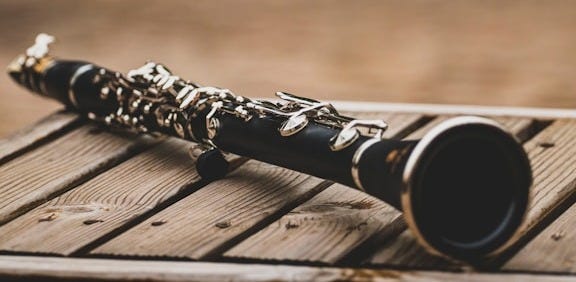
“When I was kid I had a little keyboard, a toy, really, that had different instrument sounds. I don’t know why, but I liked the sound of the oboe.”
“That’s it?” Jodie asked, sure that he was bullshitting her now. “You liked an electronically produced sound and decided to dedicate your life to it without even hearing an actual oboe?”
“No, not exactly,” he chuckled. “Something about it must have stuck in my mind about it, but I never wanted to be a musician. I thought I’d be an entomologist or something like that. I liked catching insects. Playing oboe didn’t enter my head till years later.”
Here was the opening she was looking for. “I’m surprised you weren’t interested in being a musician like your dad. You must have grown up surrounded by music. What changed your mind later about becoming a musician?”
“You sure have a lot of questions.” He was disheartened to hear that she knew who his father was and wondered if his disappointment showed on his face.
“What did you expect from a reporter?” she said, afraid she’d overplayed her hand and that he’d end the interview.
“Yeah, well, where to begin?” He’d recently read that most people lie a few times in every conversation—women to make other people feel better and men to make themselves look better. He didn’t want to lie to this girl he was attracted to or to himself, but it was a sticky question to answer. “To begin with, it’s complicated when you have a parent that’s famous.”
Jodie tried to keep her face blank and not give away how excited she was that he’d broached the topic. She gave a slight nod.
“Maybe the fame part doesn’t even matter and all kids go through the same kind of thing with their parents. You see, I wanted to be just like my dad, but I also didn’t want to be anything like him. I know that sounds weird, but the truth is I wasn’t like him and couldn’t be like him, because my personality was the opposite of his. He’s outgoing and gregarious, and I was shy and inward. You probably know the line he’s famous for, eh?”
“You mean, ‘Let’s have some fun!’”
“That’s the one. He was always saying that, not just at shows. He’d take me to the playground, or to the beach, and say, “Let’s have some fun.” And he’d end up surrounded by people and having a great time, but I never did. Our outings were never fun for me. Wherever we went, people clustered around him, and while he was the center of attention, I’d slowly disappear into myself.”
“So you didn’t have a very happy childhood?” Jodie commiserated, biting her lower lip.
“Oh, I wouldn’t say that. I mean my parents loved me, I had everything I wanted, I got to see and do lots of interesting things. I never thought of myself as unhappy. I wasn’t depressed. It was an aspect of my father’s personality that I struggled with, and it was probably my fault, not his. He was the life the party and I liked being alone. I retreated into myself and found enjoyment in other things. When I thought about being a musician, I associated it with being like my dad, so I ruled it out.”
“What brought you around?”
“You were right in saying I was surrounded by music. There was always music playing in the house, not just rock ‘n’ roll either, and there were lots of instruments laying around.”
“Even an oboe?”
“No, but penny whistles, ocarinas, drums, stringed instruments, and I used to play around with them when no one was around. We also had an incredible record collection. I had several quiet hobbies, like collecting bugs, and rocks, and stamps, building model cars and planes, and I read a lot. I liked having classical music in the background because it didn’t distract me from what I was doing. It seems I got to like classical music by accident.”
“Music was important to you like it was for your dad, but you chose a very different type. It sounds like you were expressing your closeness to and distance from your father through your choice of music.”
“I never thought of it that way, but you’re right. You’re very perceptive. You sound like a psychotherapist more than a journalist.”
Jodie laughed. “Don’t you think a journalist needs to be perceptive? But go on with your story.”
“My mom played clarinet when she was young and and I found her instrument in a cabinet. It took a while for me to get a sound out of it, but I kept fooling with it until I could play some simple tunes. I became more and more intrigued with it and gradually learned to play along with some of the records.”
“Wow, that’s great. I suppose your parents encouraged your musical activities.”
“They didn’t know anything about it. I was secretive about it and only practiced when I knew no one would hear me. The studio in the basement was perfect and I used it when my dad wasn’t around. My mom never went down there. But one day I slipped up. I was so intent on a piece I was learning that I forgot the time and my father walked in on me. It was so embarrassing.”
Jodie giggled. “You make it sound like you were caught masturbating.”
Reddening a little, Reid said, “I was only about ten. I didn’t have secrets like that yet.”
“Ten! I imagined you were describing what you did at fifteen or sixteen. Now I’m really impressed. How did your father react?”
“He went nuts. He must have been listening for a while and I didn’t realize he was there until he started clapping and yelling ‘Bravo’. He wrapped his arms around me and called for my mom at the top of his lungs and she came running, out of breath, thinking something awful had happened. My dad was dancing around with me shouting that I was a prodigy.”
“Sounds like quite a scene.”
Reid couldn’t believe he was talking about such personal stuff to a stranger. He’d never mentioned these things to anyone before, and now the stories were pouring out of him as if a spigot had been opened. “It was. I was embarrassed about using my mom’s clarinet and wanted to apologize, but I couldn’t get a word in. My dad had all kinds of plans for me. He wanted to parade me around and show me off all over the place, which is the last thing I wanted. My dad had never been so proud of me, and I was happy about that. I always felt like a failure because I wasn’t good at the things he tried to teach me.”
“So then the cat was out of the bag and you were on your way to being a clarinetist. What made you switch to oboe?”
“Once my dad accepted that I wouldn’t play in public—my mom stuck up for me—my life got easier. I didn’t have to do music in secret and had lots of support from both my parents. They had the clarinet overhauled which made it easier to play and sound so much better. They got me books and tapes so I could learn to read music. As I started listening to music in a more serious way, the sound of the oboe stood out, and I remembered liking it on my toy keyboard, but hearing how it soared over the rest of the orchestra, like a bird taking flight enthralled me. It didn’t dominate over other instruments but hung above, clear and beautiful. The more I learned about the oboe, the more I liked it.”
“What else turned you on about it?”
“Well, I liked the fact that the orchestra tunes from the oboe. It’s a modest instrument but indispensable. Even the fact that it’s supposed to be difficult appealed to me, because I like solving problems. I’m pretty methodical and persistent. When I read that some oboists shape their own reeds, that was the clincher. That was right up my alley. I’m the kind of guy who’d just as soon tie flies as catch fish.”
“Sounds like it was the right instrument for you—modest but indispensable.” Jodie was getting to like Reid quite a bit. He was open, honest and genuine and was certainly intelligent and talented, but it bothered her that he didn’t talk about how the music affected him. He seemed more caught up with the challenges of mastering his instrument than with the music itself. Surely, deep inside him it was the music itself that called to him, and what she really wanted to see in him was a heart that was moved by the music he heard and played.
“Yes, yes,” he said. “The problem was, I’d never touched an oboe, but I got up my courage up and told my parents that I didn’t want a party or any presents for my next birthday or Christmas and the thing I really wanted was an oboe. I knew they were really expensive. My dad was great about it. He said, ‘Buddy, if you want an oboe that much, let’s look around and find a really good one for you.’ And that’s how I came to play the oboe.”
“You taught yourself, without lessons?”
“I did take some lessons to get started, and I occasionally went back to the music shop if I had a problem or question, but I pretty much practiced on my own until I started high school.”
“I bet it was hard getting through high school as an oboe player. I mean being in orchestra is enough of a black mark against you without playing a weird instrument.”
“Actually, high school was great. You see, before, especially in middle school, I was known for one thing—having a famous father. But I was shy, didn’t care for sports, didn’t have many friends. I was known more for who my father was than anything I did. But in orchestra, I began to be accepted for myself. When I first signed up, the teachers saw my name and said, ‘Sure you don’t want band?’ and when I said I played oboe they raised their eyebrows, but they let me audition and I got in. They were impressed I had my own instrument.”
“I bet they were impressed with your playing.” She understood why the oboe appealed to him. It allowed him to be part of something while still remaining apart.
“Maybe. The teacher was great and so were the members. It was the first time I was part of a group effort and was an asset rather than a disappointment. For our Christmas concert, our first piece was Gabriel’s Oboe from the movie The Mission. People must have recognized it. The audience loved our performance and we joked that they were as crazy about the music as the Guaraní in the film. I sort of became a star, not for who my father was, but for myself, even though I hadn’t changed. I was the same but different, a butterfly instead of caterpillar. So, yeah, high school was great. What’s the matter? Did I say something wrong?”
Jodie had slammed her pen down on the table. She couldn’t write an article focusing on the fact that his father was famous. What a betrayal that would be. It was dishonest and manipulative of her to think of framing the piece around his relationship with his father. Cross with herself, not at him, she muttered, “No, you didn’t say anything wrong; you just ruined my article.”
“I did? I’m sorry. I didn’t mean . . .” He didn’t know how, but he knew that he had failed in some way. He wanted so much for this strange, luminous person to like him, but he spoiled it. He thought he was saying all the right things, but he’d gotten it all wrong.
He had such a stricken look on his face that she felt compelled to explain. “It’s okay, Reid.” She tried to smile. “My story was going to be about the son of a rock legend becoming a classical musician. I’m so sorry.”
Jodie rose from her chair, ready to bolt, and Reid, desperate for her not to leave, raised his hands. Instinctively, she took hold of them and, all at once seeing humor in the fiasco of their mutual confusion and how seriously they were taking themselves, started laughing hysterically.
“Are you all right?” he asked.
She pulled him up from his seat and said, “C’mon let’s go.”
“Where are we going?”
“I don’t know,” she said, shaking her head. “Let’s have some fun.”
March, 2026