

Non-Fiction
Deluges and Delusions
In The Voyage of the Beagle, Darwin expresses negative attitudes towards indigenous peoples, using such words as hideous, miserable, and filthy. He describes the natives of Tierra del Fuego as filthy cannibals and suggests that the difference between wild and domesticated animals is smaller than that between savages and civilized men. He was somewhat more impressed with the aborigines of Australia, saying, “Never the less, they appear to me to stand some few degrees higher in civilization, or more correctly a few lower in barbarism, than the Fuegians.” If such views strike modern readers as odious and uninformed, hardly anything more could be expected of the Victorian Englishman in his early twenties who penned them two decades before the birth of Franz Boas, the “Father of American Anthropology,” who notably rejected the idea of cultural evolution in favor of cultural relativism. In fact, Darwin’s ideas about humans and civilization did, in time, evolve.
The point is that we’re all influenced by the notions and prejudices of where and when we live, even one of the most innovative and fearless thinkers of all time. While Darwin is famous for his observations, his tireless attempts to account for what he observes form the core of his account. He endlessly theorizes about geological, botanical and zoological matters, seeking to understand everything he observes. In this he is not so different from Robert FitzRoy, the energetic captain of the Beagle charged with conducting hydrographic surveys, creating charts and taking measurements, who is remembered for later regretting having taken Darwin along on that five-year journey and being one of the most outspoken critics of the theory of evolution.
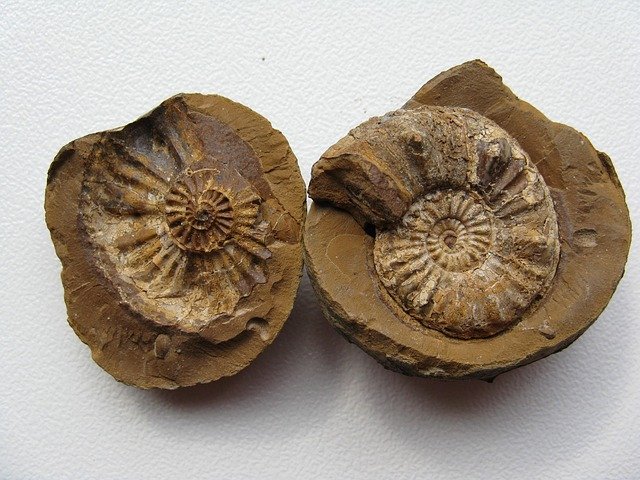
FitzRoy remained friendly with Darwin, who was less than five years his junior, for some time after the voyage, until Darwin’s theory achieved fame and notoriety. It’s been claimed that the captain wasn’t particularly religious in his views and subscribed to scientific explanations during the voyage, but became more religious and less tolerant after marrying. In his Narrative of the Surveying Voyages of His Majesty’s Ships Adventure and Beagle, published three years after their return and which Darwin’s account was originally part of, FitzRoy included a chapter near the end entitled A VERY FEW REMARKS WITH REFERENCE TO THE DELUGE. In it he disputes scientific explanations of geological phenomena, offering, instead, explanations according with Scripture, but he does so in a way that sounds scientific, basing his conclusion that the Biblical Deluge was a historical event on, among other things, the existence of shells atop high mountains and their compressed condition, which he attributed to the pressure they were under during the Deluge.
Darwin, on the other hand, explained the existence of shells on mountains by hypothesizing that the sea bottom had been pushed up in places to form the mountains as a result of earthquakes and other natural phenomena, and that such changes continue to occur. On the face of it, FitzRoy’s theory seems as reasonable as Darwin’s. Both men observed the same phenomenon and formulated theories to explain the reasons for it. Theorizing is a universal human activity, probably a skill developed to improve our chances of survival. When we observe a peculiarity, we try to understand its cause because it may indicate a threat or provide an advantage.
FitzRoy’s theorizing was similar to Darwin’s except in one respect. Darwin considered the evidence in light of the best scientific information available and followed wherever it took him, even if the result was not what he expected or desired. Before embarking on the voyage, Darwin was studying theology with an eye to joining the clergy. His faith in God and religion was, perhaps, at the outset, stronger than FitzRoy’s, and he accepted only reluctantly evidence that contradicted what was presented in the Scriptures. By contrast, FitzRoy took the opposite path, interpreting evidence to support a preconceived conclusion. While appearing to employ scientific methodology, he exploited it to confirm his own bias.
It’s curious that the things they saw shook Darwin’s faith in Scripture but had the opposite effect on FitzRoy. Perhaps his change of heart and increasingly uncompromising attitude was due to a deeply religious wife or resentment of Darwin’s growing fame which far overshadowed his own, but that is only theorizing on my part. Still, I find the possibility hard to dismiss that FitzRoy objected less to the theory of evolution than to the unexpected success of his younger companion whom he allowed to accompany him on the voyage. After all, if not for him, Darwin never would have made the observations he did and never would have come up with the theory that made him famous. FitzRoy was, no doubt, perfectly sincere about the views he expressed, regardless of his internal motivations. If he is to be faulted for anything, it is his use of a seemingly scientific approach to undermine science.
While Darwin is lauded for his brilliance in developing a theory that ties together the far-flung pieces of a complex puzzle, as well as for his powers of observation, the patience, tenacity and careful study that gave him access to the elements he pieced together, I can’t help admiring him most for his courage in following wherever the evidence led, even when it overturned his most deeply held beliefs.
Every day of our lives, in our own voyages, we process the information we’re deluged with and interpret it to make decisions that determine how we understand the world and conduct our lives. It’s all to easy to take the path that FitzRoy chose and construe the evidence we’re inundated with in a way that falls in line with our own beliefs and prejudices. In fact, we can choose to surround ourselves with sources of information which, although unreliable, are in line with our biases and allow us to hang onto our old ways of thinking and being, and can avoid those sources which upset the apple-cart by presenting a conflicting point of view. The harder path is to do what Darwin did and reshape our thoughts and lives not in accordance with what is comforting to hear and what we want to be true, but with what the evidence suggests is true. As we look back at FitzRoy now, doesn’t he seem a bit silly for insisting on the Deluge and self-delusion instead of integrating new knowledge that could have helped him grow and evolve?
May, 2026