

Non-Fiction
Karma
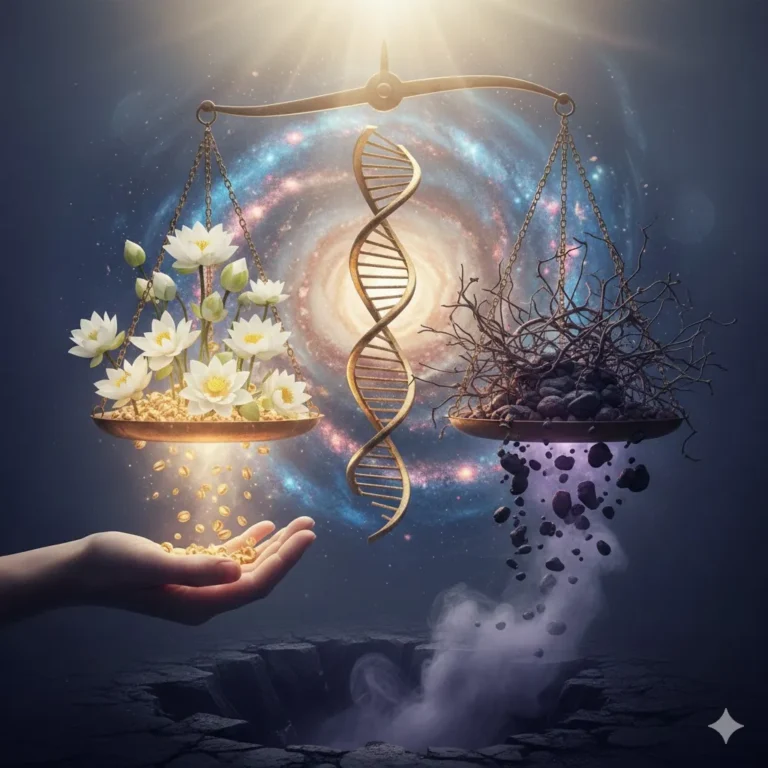
We desperately want to believe in the existence of justice in the world, to feel that fairness will prevail, and that, in the end, all inequities will be corrected. In the happy endings of our books and movies, everyone gets his due and all is evened out. It’s what Dylan imagined in the lines the loser now will be later to win and the slow one now will later be fast, although, as it’s turned out, the times have changed in a different way, and now virtue is punished, depravity is rewarded, the wealthy and powerful grow wealthier and more powerful, and the weak and impoverished are further dispossessed. Still, we look for those happy endings and are scandalized when justice doesn’t triumph. It’s how we’re built. We might not be alone in feeling a sense of outrage at unfair treatment, as research suggests it’s a trait shared by animals.
Sadly, most of us witness a great deal of injustice in our lifetimes and and recognize that the hope for the ultimate triumph of justice must be postponed until some later date. In the Sermon on the Mount (Matthew 5:3-12) we are told that the meek shall inherit the earth, mourners shall be comforted, and the persecuted will gain the kingdom of heaven, but not in this lifetime. The concept of heaven and hell provides comfort by fostering a belief in divine justice that we will experience when our sojourn in this world ends. It’s a pacifying idea that Marx blamed for stifling the impulse of workers to revolt against unfair conditions. He called religion the opium of the people, because it breeds complacency and contentment and discourages resistance in the face of injustice. No need to do anything because by and by the reckoning will come.
A slightly different, more nuanced understanding of karma is revealed in a story by the Ming Dynasty writer Ling Mengchu. It tells of a Taoist who invites an old man who has been kind to him for a meal. The old man refrains from the first two dishes because, as he later says, he was repulsed by the idea of eating a puppy and an infant, and partakes only of the third, a rice cracker. The Taoist explains that what the man thought was a puppy was actually “the root of the everlasting Lysium aspen,” which confers on those who eat it a life of a thousand years, and what he thought was an infant was “a ginseng mandrake” which gives ten thousand years of life. Understandably upset, the old man asks why he didn’t tell him, and the Taoist responds that it was his karma to perceive those dishes as he did. “Since fate had decreed otherwise, how could I reveal the secret workings of heavenly destiny to you?” he says. The last dish, which the old fellow did eat of was actually a “Thousand Year Truffle” allowing him to live to a hundred in good health. “Such was your karma,” the Taoist says.
The story teaches that karma is more than just payback. It’s a cyclical process or pattern that involves how we see and understand the world, which, in turn, guides how we behave, which, then, determines what happens to us—and then the cycle repeats itself, since the things that happen to us—our experiences—influence how we see and understand the world. A similar dynamic is expressed in a wonderful poem by E. E. Cummings.
maggie and milly and molly and may
went down to the beach (to play one day)and maggie discovered a shell that sang
so sweetly she couldn’t remember her troubles,andmilly befriended a stranded star
whose rays five languid fingers were;and molly was chased by a horrible thing
which raced sideways while blowing bubbles:andmay came home with a smooth round stone
as small as a world and as large as alone.For whatever we lose (like a you or a me)
it’s always ourselves we find in the sea
The particular experience of each girl might be attributed to happenstance, but the last line, it’s always ourselves we find in the sea, makes clear that something in their personalities gave rise to what they found and felt, and that sounds a lot like like karma. Maggie and Mollie will probably have different reactions the next time someone proposes a trip to the beach (assuming that Molly doesn’t enjoy being chased by horrible things, but who knows?), and that means this experience will inform future attitudes and experiences. I’m not suggesting that Cummings wrote this poem to expound on the concept of karma, or that he had karma on his mind when he wrote it—the poem is, as poems are, about many different things and shouldn’t be pinned to a single interpretation—but it is, nevertheless, a concise and beautiful statement about the cyclical nature of how character affects experience which, in turn, affects character, and this, it seems to me, is the essence of karma.
Fate and destiny are harsh words, heavy with foreboding and and inevitability and a sense that outside forces assign and determine what happens to us. Karma feels more personal because our own actions play a role and we have some control in the matter. Not complete control, because our actions are limited by our perceptions. When you’re a hammer, you see everything as a nail, and since we don’t have much say in how we are formed—we may start out in life as that metaphorical hammer. But, if we recognize how karma works, we can throw a metaphorical wrench in the works and disrupt the mechanism by reacting to things in a different way than we’ve been programmed to react. In other words, there’s a possibility that we can change ourselves, and if we manage to do so, we can change our karma and our lives.
January, 2026