

STORIES
Genesis
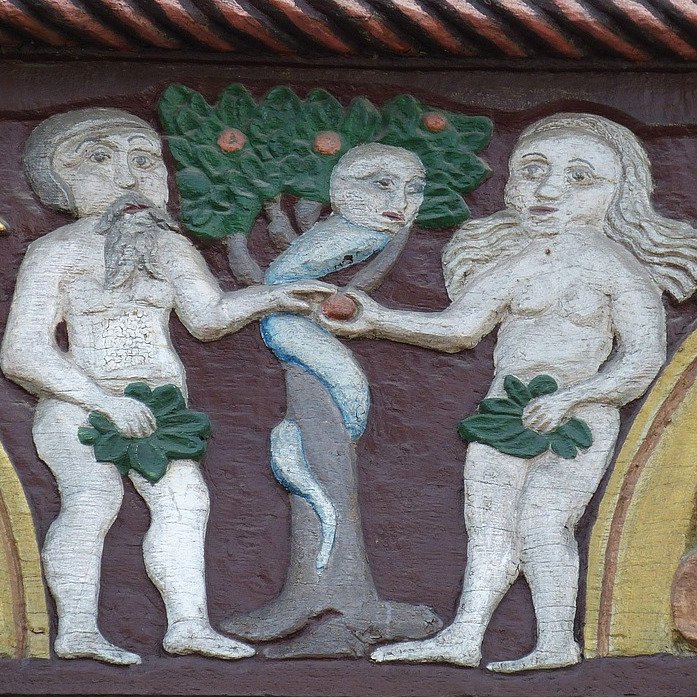
Will’s sleep was fitful, his return to consciousness clouded by gauzy remnants of a mostly unremembered dream he could neither effectively recall nor fully put out of his mind. Wavering between sleep and wakefulness, part of him longed to return to the dreamworld he had just inhabited and remain hidden away, warm and snug under the thick blanket. But as the morning sun, pale and watery, touched the window pane, he dragged himself out of bed, washed and got dressed. After downing a cup of hot tea, a piece of toast and few slices of apple, he folded himself into a heavy, gray overcoat, opened the front door, and with a grimace stepped out into the chill, damp March air.
Walking briskly, his shoulders pushed up to his ears, he made his way toward the small chapel he attended every Sunday. The lingering symptoms of a stubborn cold had kept him in the previous day, but he convinced himself that the outing would improve rather than aggravate his condition. He’d be rewarded for forcing himself out into the inclement weather, against instinct and desire, to perform a necessary duty. For that is what his weekly devotion was, even if he wouldn’t have admitted it even to himself. If you asked him, he’d have staunchly insisted that he attended church not out of duty but choice. He’d tell you he enjoyed it. His enjoyment, however, may have had less to do with the service than the feeling of successfully fulfilling an obligation. The satisfaction derived from executing a duty was commensurate to the inconvenience and discomfort it entailed. So in the end, venturing out into the cold to perform the weekly rite, despite his illness, was bound to do him good.
Entering the house of worship, he nodded politely to familiar faces here and there as he made his way to his accustomed seat. Without being standoffish he kept his distance from other parishioners, many of whom seemed to treat the weekly gathering more as a social than a spiritual occasion. Will felt that the time and place designated for prayer and communion with God, whether or not he truly believed in a divinity, shouldn’t be tainted or diluted by trivial distractions. It pleased him to see other members of the congregation engaged in their devotion while he was occupied with his own, but he had no interest in getting to know them personally or forming friendships with them. Prayer, like the hymns sung by the congregation, gained strength from the voices of others, but was, Will believed, fundamentally a solitary activity. It was enhanced by the presence of others, as long as privacy was maintained.
The choir performances were, for Will, the best part of the service, maybe less for the music than for the diligence and discipline they attested to. Those were qualities he admired. Clothed in their blue robes and intent on the musical scores before them, the choir members lost their individual identities as they were subsumed into something larger than themselves.
Sermons were hit or miss. They could be inspiring, provocative or crushingly dull. The chapel had the custom of inviting guest pastors to deliver the sermon every other week, resulting in lectures of remarkably uneven quality and character. A good sermon might occupy his mind not just for the moment, but lead to a stream of thoughts that nourished him through the week. Will tended to be more apprehensive than hopeful about this segment of the service, and now he scrutinized the young minister who stepped up to the pulpit, trying to take his measure and form some idea of what the next thirty minutes would be like.
The young man started out hesitantly, his voice high and unsteady, but he soon gained confidence. The text he selected was the story of creation, and he grew animated as he recounted the wonders God had wrought. His face glowed as he recited: “And the earth brought forth grass, and herb yielding seed after his kind, and the tree yielding fruit, whose seed was in itself, after his kind . . .” With each new marvel of creation he described, his adoration rose to new heights and by the time he got to the creation of mankind, he was in a state of ecstasy. His voice cracked with emotion as he incanted: “And God blessed them, and God said unto them, Be fruitful, and multiply, and replenish the earth, and subdue it: and have dominion over the fish of the sea, and over the fowl of the air, and over every living thing that moveth upon the earth.”
Will was fascinated by the cleric’s passion that had turned him from a diffident a young man into a captivating presence. It wasn’t a staged theatrical performance but an authentic transformation. Something that lay dormant and hidden in the man had emerged and taken hold of him. A fierce anger overcame him when he described the serpent’s duplicity and Eve’s gullibility. His betrayed his contempt for Adam and Eve for their perfidy and obstinacy in disobeying the Lord’s one commandment, after He had bestowed the gift of such a wonderful existence upon them. In a thunderous voice he roared, “Cursed is the ground because of you; through painful toil you will eat food from it all the days of your life. It will produce thorns and thistles for you, and you will eat the plants of the field. By the sweat of your brow you will eat your food until you return to the ground, since from it you were taken; for dust you are and to dust you will return.” The man’s passion and vehemence astonished and mesmerized Will. The wrath of the Lord, he thought, couldn’t have been more intense than that of the youth fulminating from the pulpit.
Then something unfortunate occurred. While the clergyman inveighed against Eve for offering her mate the forbidden fruit, Will had the uncomfortable sensation of needing to cough. It was something from his breakfast, he guessed, most likely a bit of apple peel that had evaded his careful brushing, that had gotten dislodged from his teeth and found its way into his throat. He tried to clear his throat as inconspicuously as possible with no luck. He feared what was coming. Although his cold had gotten better, the infection had seeped into his chest, resulting in occasional but agonizingly painful fits of coughing that wracked his body and made him feel like his ribs were cracking. He pulled a handkerchief out of his pocket in preparation for the coming spasm. While he waited he gazed at the intricate patterns and whimsical designs printed in various shades of blue on the square of cloth in his hand. Then it came. He wrapped his arms around his chest and at the same time tried to hold the handkerchief over his mouth as he produced a series of staccato coughs. His eyes clenched shut with the pain that was even more intense than what he had previously experienced. His body stiffened. When the spasm finally ended he opened his eyes.
He was no longer sitting on a hard wooden bench in a cramped chapel, but stretched out on a verdant lawn in the midst of a splendid garden alive with color, so different from the tepid world of washed-out hues he lived in. Like the three children who discovered an enchanting world on the other side of a wardrobe, Will had been transported by his cough and a blue handkerchief into an exotic new realm that felt surprisingly comfortable and familiar. His shoulders, so often thrust up to his ears against cold or stress, relaxed, and every part of his body felt alive. He breathed in deeply and feasted on the fragrant, wholesome air that filled his lungs. This is what living was supposed to be, not the shallow existence cluttered with meaningless activity he had frittered his life away on. It was perhaps inevitable that the delight of the moment led him to compare the glorious state he was experiencing to his normal life. The contrast filled him with guilty regret at not living fully in the best possible way and instead letting precious life slip by. That feeling of regret pushed aside the delight of the moment and just like that his paradise evaporated. The Eden he had unexpectedly come upon was forfeited by the treacherous misdirection of his own thoughts.
Once again he was sitting in his narrow pew and the minister’s words sounded in his ears as if from some distant place. He looked around self-consciously, wondering if people were watching him and chuckling about how he dozed off like an old man in the middle of the sermon. “To hell with them,” he thought. “They’re supposed to be paying attention to the sermon, not looking at me. There’s no cause for embarrassment.” He knew, of course, that despite his resolution to the contrary, he would feel embarrassed if anyone remarked about his lapse, and his embarrassment would turn into resentment. He tried to put all that out of his mind. The only thing really worthy of regret, he mused, was the loss of paradise, waking from a dream that had given him so much pleasure and comfort. The corner of his brain where fantasy and unreasonable optimism dwelt teased him with the notion that the blue handkerchief and a spasm of coughing could return him to that blessed place.
“So why do you think the pastor became so impassioned?” asked Harold, taking a sip of coffee and inadvertently dipping his sleeve into the mayonnaise on his plate. Over lunch, Will had been telling his friend about the sermon and his aborted dream. They often got together on Sunday afternoons to have a meal together and discuss whatever happened to be on their minds.
“Well, I think he was really resentful about the cost to him, personally, of the first couple’s disobedience. If not for their sin he could have been living out his existence in a sublime Eden. Instead, he has to live by the sweat of his brow. He sounded as aggrieved as a son expecting to inherit a fortune from his deceased father only to learn that the old man had squandered it all and left him with nothing but debts.”
“Ah,” chuckled Harold. “There’s no anger as fierce as that of a man who has something taken away from him that he never earned in the first place. But tell me, don’t you think there was a trace of sexual anxiety in his anger as well?”
“I figured you’d say something like that,” Will said nodding his head knowingly. His friend, a psychologist, found sexual motives in just about every situation. “Don’t you think he could have been legitimately upset about the enormity of the sin and its consequences? After all, it’s no little thing – ‘man’s first disobedience, and the fruit of that forbidden tree whose mortal taste brought death into the world, and all our woe, with loss of Eden.’ Isn’t that enough to be upset about? Is it always necessary to bring sexuality into it?”
Will sometimes wondered if his friend hadn’t become a psychologist just to have a legitimate excuse to talk about sex. The mild, crumpled, awkward fellow sitting across from him, who was constantly spilling things and tripping over himself, seemed an unlikely candidate for sexual obsession, but just about every conversation Will had ever had with him, regardless of the topic at hand, ended up turning toward sex.
“Willie, my boy,” Harold said, shaking his head. “It’s not a matter of bringing it in. It’s already there and can’t be ignored. You talk about sex like it’s an optional side dish. But it’s part of the entrée and not something separate. How could you possibly ignore the sexual aspect of the Adam and Eve story?”
“You mean because of the snake?” Will asked. “You think that’s a phallic symbol, right?”
“Of course,” confirmed Harold. “There’s that and also the fact that the story is about the primal male and female. What’s the first thing they do after they eat the fruit? They hide their nakedness. Don’t you think that eating the fruit is a metaphor for the sexual act itself and that the forbidden knowledge they acquired was carnal knowledge? Think about how the word know is used in the Bible. As soon as they’re ejected from Eden we hear that the man knew his wife and she conceived a son. And what penalty does God immediately inflict on Eve for her sin? Painful childbirth. Oh no, my friend, there’s no way of stripping sex from this story.”
“Of course, you’re right,” Will laughed, throwing up his hands. “I can’t rebut you. And I suppose that the pastor’s passion was probably related to his sexual hang-ups. I suspected his misogyny when I saw how he screwed up his face every time he mentioned Eve. All I’m saying is that there are other aspects of the story worth considering that don’t have anything to do with sex.”
“I certainly don’t deny that, my friend. Just because sexuality is involved it doesn’t mean that’s all there is. When you told me about the pastor and his inordinate passion, I did indeed glibly impute it to his vocation, which is one that celebrates repression. But it’s clear that this story has a deep meaning for you personally. Otherwise, it wouldn’t have led to that dream about your own private Eden. Not that the sexual element can be completely disregarded, but in your case I think there’s something else as well that transcends or at least isn’t limited to sex.”
“Thank you for that,” said Will with a chuckle to his friend who was dabbing at the mayonnaise on his sleeve with a napkin, which he had just noticed. “You know, maybe it’s a relic from my earliest memories of the story of the garden of Eden, but I’ve always had a funny feeling that pursuing knowledge is illicit or sinful in some way, that it goes against nature.”
“That’s amusing coming from you,” asserted Harold, still preoccupied with his sleeve but momentarily glancing up to give his friend a quizzical look. “If you were so leery of acquiring knowledge how is it you became a physics professor? Was the sinfulness of pursuing knowledge especially alluring for you?”
“Who knows?” Will responded, shrugging his shoulders. “Could be. But haven’t you ever had the feeling that we can go too far in the quest for knowledge, that some secrets should remain secret? Especially with the dark things you uncover delving into people’s psyches.”
Harold thought for a minute before answering, “No, I don’t think I ever felt that way. I just feel gratified when I discover something hidden in a patient’s psyche that has caused torment and when brought to light provides a path to healing. But that’s all beside the point. You know, of course, that the fruit that Adam and Eve ate was not from the tree of knowledge but from the tree of knowledge of good and evil.”
“That’s right,” Will said, slapping his forehead. “I don’t know how I could have forgotten that. Silly of me. It’s not knowledge in general that’s forbidden but specifically moral knowledge.”
“Not an uncommon error,” Harold mused. “We sometimes abbreviate phrases and in the process completely alter their meanings. I sometimes hear people shorten the love of money is the root of all evil to money is the root of all evil. There’s a significant difference between the two versions, wouldn’t you say? Same in this case. When you lop off of good and evil from the tree of knowledge you ignore the fact that eating the fruit opened a whole new dimension of morality to Adam and Eve and their progeny. For the first time it became possible to distinguish between right and wrong and to choose between the two.”
“You know what I never understood?” Will put in. “If Adam and Eve didn’t have the capacity to know right from wrong before eating the fruit, how could eating it be a sin? It seems they must have already had some moral awareness without the fruit.”
“You missed your true calling, Will. You should have been a biblical scholar, not a scientist. I can’t answer that question, but this is what I was going to say. Of all my acquaintances I don’t think I know anyone who takes responsibility more seriously than you. As I’ve told you before, you are almost compulsive in your need to dutifully carry out what you see as your obligations. What is an obligation but a moral compunction to do what you think is right? Because of that you carry the world on shoulders and sometimes those shoulders get a little tired. So you imagine a world without duties or moral dilemmas. I’m sure that’s what your little reverie at church was all about. It removed you from the complicated and stressful world you inhabit and plumped you down in a simpler place, a paradise where your mind could just relax and be occupied with the enjoyment of physical sensations.”
“You may be right. I did feel extraordinarily at ease for those few seconds,” Will recalled. “Lying in that luxuriant garden made it seem like the problems and projects I spend my time on in my actual life were unimportant compared to the more noble occupation of just experiencing and enjoying life.”
“Knowledge of good and evil,” Harold said grandly, waving his arms, “entails hardship. The Bible got that right. In that respect ignorance is bliss.”
“So,” Will said slowly, drawing the word out as he deliberated whether to tell his companion that he just placed his elbow on his mayonnaise-soaked napkin. Not wanting to embarrass his friend and taking to heart the idea that ignorance is bliss, he ignored the mishap and said, “You think my brief escape to paradise was just a little vacation for my brain?”
“Absolutely! Your dream transported you to a place where your mind was at ease and your body was in harmony with nature. When the world is too much with us, the mind looks for an escape route. You momentarily experienced a reversion to a more natural state, unburdened by thinking and decision-making, like that enjoyed by the lower animals—or by man before that forbidden fruit was tasted.”
The conversation continued for some time, meandering this way and that, ending only when it became apparent to the men that the wait staff was growing impatient with their prolonged stay. Saying their goodbyes, the two friends went off in different directions. As he made his way home, Will’s thoughts remained on Genesis. He tried to recall the first time he heard the story of Adam and Eve and thought it was probably as a toddler when his mother used to read to him from a tattered children’s Bible whose pictures he could still vividly recall. He saw before him the image of a snake twined around the branch of a tree and the partially obscured figures of a man and woman sharing a shiny apple. The tale of Adam and Eve, he realized, was one of the first stories he ever heard. No wonder it continued to have an impact on him.
Encouraged by warmer temperatures and the re-emergence of the sun after a blustery morning that threatened rain, Will gave in to an urge to linger outdoors before returning home. He made his way to a nearby park and sat down on an empty bench. He closed his eyes, leaned his head back and breathed in the fresh air redolent with the fragrance of early spring flowers. But any hope he may have had of reclaiming the peaceful paradise he visited in his dream was shattered by an unpleasant din. Opening his eyes, he was dismayed to see a woman approaching, followed by a small child crying convulsively. The woman turned to the wailing youngster, smacked his bottom a couple of times and scolded, “That’s what you get when you don’t listen.” The howling increased in volume and the woman, heaving a loud sigh, lowered herself onto the bench beside Will, seemingly oblivious to his existence.
Had he a less courteous nature he would have bolted. Will, however, felt it would be rude to abruptly jump up and leave. He would remain seated for a minute or two, look at his watch, and only then inconspicuously shuffle off, pretending his departure had nothing to do with the newcomers. Closing his eyes again and wishing he could somehow close his ears, he started counting to himself, waiting for an appropriate amount of time to elapse before rising.
“Behave yourself, already. You’re not going to get what you want by acting up,” the woman reprimanded. Will imagined her shaking her finger at the bawling child. He wondered what the boy, who he guessed was about three years old, had done wrong. Was he just being contrary? It seemed the two were locked in a battle of wills. Maybe the boy was testing his power against the being who seemed to have unlimited power.
Will’s ruminations were interrupted by a tugging on his arm. He cracked open his eyes and turned toward the source of the disturbance. “Here,” the woman beside him was saying to him, while her son, sitting on the ground a few feet away from her, continued to wail. “Take this. It’s very tasty.” She had stuck her hand into the bag she was carrying and pulled out a ripe, red apple, and held it out to him. The situation was so ridiculous in light of the events of the day and what had been on his mind that he almost laughed. Why was this strange woman offering him an apple? “C’mon, take it,” she insisted impatiently. “It’s a nice apple. It’s good for you.”
The woman’s manner made it hard for him to refuse. He took the proffered fruit, polished it on his sleeve and took a bite. “It’s very good,” he murmured. “Thank you.” She looked at him wordlessly, with a faint air of disapproval. Then with another sigh, she rose from the bench, walked over to the still-crying child, grabbed his hand and walked off.
With the noise receding, Will could think again and considered what had occurred. He dismissed the apple as a coincidence. Why an apple? It’s what was in her bag. If she happened to have salt water taffy, that’s what she would have pressed on him. It was clear that the woman felt guilty. She felt compelled to give him something to compensate for disturbing his peace and quiet and to show that she was a generous, kind-hearted person, not a monster who would mistreat a small child. As he nibbled on the apple he thought about the child’s disobedience. Did the youngster even know right from wrong? At his age right and wrong couldn’t mean much more than doing what pleased or angered his mother. When he was six months old, his mother would have had little expectation of obedience, so he wasn’t capable of doing wrong then. But now she was impatient when he didn’t comply with her wishes. The poor child probably missed those idyllic days before right and wrong, when he could just do as he pleased. Growing older meant relinquishing that carefree state. The little snot had good cause to resist the inevitable responsibilities that came with maturity. There was no turning back. Once people reckoned that you could distinguish between right and wrong, you were responsible for yourself and lost forever that protective innocence that made you the center of the universe.
Will drew in a deep breath and exhaled. The sky had clouded over and the air had chilled. He got to his feet, tossed the remains of the apple into a trash can and set out towards home.
April 2022