

Non-Fiction
Universal Soldier
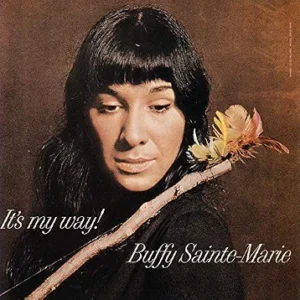
Buffy Sainte-Marie has been on my mind lately because of the scandal concerning her apparent cultural appropriation which has been in the news, and that got me thinking about her epic song, Universal Soldier. It seems to me that the role of the military in determining the fate of this country and the world makes that song especially relevant now.
When Trump first tossed his cap into the ring, there were those who insisted we needn’t worry because he wouldn’t be nominated, and if he was nominated, all the better because he would lose the general election in a landslide. There was no way he could become president. When he was elected, we were told that our system of government was so sturdy and robust that he wouldn’t be able to do much harm. We know how that worked out. Since Trump first came on the scene, we’ve been assured again and again by well-meaning people that congress, moderate Republicans, the courts, the constitution, the press, common decency, the American spirit, someone or something would stop him, but, so far, nothing has.
I understand the impulse to believe that there’s a fail-safe mechanism in place for stopping Trump and restoring democracy (restoration is a more appropriate term than preservation considering where Donald J’s juggernaut fueled by the rich, the powerful, and the magafied masses has led us). I’m also tempted to believe that our national madness will break and reason and decency will emerge victorious. It’s impossible to live without hope, and even though the institutions that were supposed to protect us have by and large failed, hope still lives, buoyed up by heroic acts of resistance, sometimes by those from whom we least expected them.
Lately, I’ve heard people talking about another institution that will absolutely not allow the country to descend into despotism—the military. It seems a strange place to pin our hopes. If we have to rely on the military to preserve democracy, isn’t it already lost? Will an institution based on obedience stand up to those in charge of it when so many other safeguards have folded and failed? I would sooner expect a handful of senators and congressmen to jump ship and flout the party line (no signs of that happening) than for the military brass to ignore the orders of the Commander-in-Chief, or for soldiers to disobey their superiors. ICE agents and police officers haven’t shown much inclination to reject the morally objectionable orders given to them, and it seems unlikely that members of the National Guard and other branches of military will refuse to do their superiors’ bidding.
I don’t question that the military establishment will ultimately determine whether Trump’s power-grab is successful or not, just whether that is something we should be comforted by. In the coming weeks we’ll probably learn if the Supreme Court grants or denies Trump dictatorial powers. Given its reluctance to restrain Trump thus far, I wouldn’t be surprised if it tries to punt and pretend there’s no crisis. In any case, if the court defies Trump, its defiance will be toothless if not backed by the military, just as Trump’s defiance of the court would impossible without the military’s support. The military, created, like AI, to serve us, could end up being our master.
Back in the Vietnam War era, soldiers returning home were commonly disrespected, even spat on, ostensibly because they fought in an immoral war, but perhaps because they came out on the losing end. It was an especially egregious attitude to take towards conscripted soldiers who may have served against their will in the first place. In later years, as a corrective, people have taken to thanking soldiers for their service. The gratitude may stem from the fact that those who opt to serve in a volunteer army make it unnecessary for the rest of us to face conscription. It’s commendable to show appreciation for those who risk life and limb to serve, and there’s nothing wrong with making people feel good about themselves, but we don’t appreciate others—janitors, factory workers, teachers and so many others who make sacrifices that benefit society—in the same way. We single out soldiers to thank for their service, as if that calling is higher and more noble than any other.
I assume that many choose military service for the same reasons that we all choose our vocations—it offers benefits that appeal to us and suit our needs. That notwithstanding, service to one’s country is admirable, especially when it entails privation and strict discipline. There are drawbacks, however, to signing up to fight whomever the ruling powers determine is our enemy at any given time and to pledge to do whatever you’re ordered to do regardless of what your conscience says. There’s no doubt many choose military service out of a sense of duty. After 9/11 there was a huge surge in enlistments due to patriotic fervor. Men and women were ready to lay down their lives for their country. I appreciate the courage, sacrifice, and good intentions of those who served and suffered in Afghanistan and Iraq, yet, can’t help feeling that the world would have been better off if they hadn’t. Being a patriot can sometimes require resisting authority rather than obedience to it.
Our fate now is in the hands of those who have taken a vow to do as they are told. A soldier’s duty doesn’t necessarily align with the kind of individual responsibility Buffy’s song demands. Tennyson’s line, “Ours is not to reason why, ours is but to do and die,” seems an accurate description of a soldier’s ethic, which we have also heard expressed, after the fact as, “I was just following orders.”
May, 2025