

Non-Fiction
Hangul
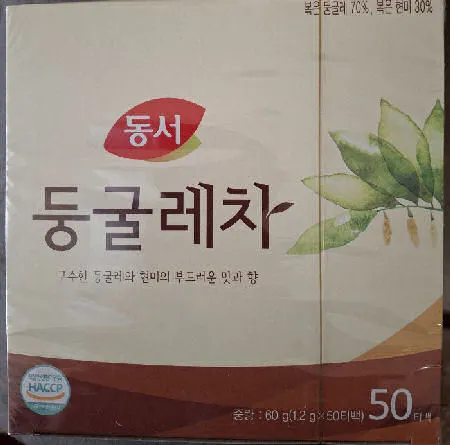
On our walk this morning, I noticed some Solomon’s seal (maybe false Solomon’s seal—hard to tell them apart unless they’re flowering) and thought it would be a good idea to recommend a Korean herb tea made from Solomon’s seal root (not the toxic berries) called doonggooleh chah. It’s not well-known here outside of the Korean community, but it’s a hit with everyone I know who has tried it. The taste is mild and pleasant. You can find it at H-Mart and other Asian groceries, but there’s a hitch—the writing on the package is in Hangul, the Korean writing system, not English. So I thought I’d present a crash course in reading Hangul.
“Whoa,” you might be thinking. “I’m not gonna be able to do that. Languages like Chinese, Japanese and Korean are way too hard.” For starters, those three languages aren’t related and have different writing systems, and, of course, I’m not talking about learning the Korean language, only reading words. If you took a little time to learn the Greek or Cyrillic alphabet, you’d be able to read words in those scripts without much difficulty, without knowing Greek or a Slavic language. The good news is that Hangul is even easier. It’s very logical because, unlike other writing systems, it didn’t evolve from earlier symbols but was devised in a rather scientific way.
There are 14 consonants: ㄱ ㄴ ㄷ ㄹ ㅁ ㅂ ㅅ ㅇ ㅈ ㅊ ㅋ ㅌ ㅍ ㅎ. That first oneㄱ sounds like something between a k and g. The next, ㄴ sounds like n and the the one after that, ㄷ is between a t and d. I won’t go through all the consonants, but you can see them in this chart.
There are 10 vowels, and they’re nifty because they are just vertical and horizontal lines: ㅏㅑㅓㅕㅗ ㅛ ㅜ ㅠ ㅡ ㅣ. The first one, ㅏ sounds like ah, and if we add another little horizontal line we haveㅑ which is yah. The next vowel ㅓsounds like awe, and once again, if we add another little horizontal line ㅕ, it’s yaw. The same happens with ㅗ which sounds like oh and ㅛ is yo, and with ㅜ oo and ㅠ yoo. Finally, ㅡ sounds like uh andㅣlike ee. (The chart uses a ya eo yeo o yo u yu eu i, which are a bit confusing and you might find my transcription easier).
Consonants are always followed by vowels, so the letters ㄱㅏㄴㅏㄷㅏ spell kanada, which is what Koreans call their abc. You’re reading Hangul already, but there’s one more important element to know and that’s patchim, which makes it possible for a syllable to end in a consonant. It’s quite simple. You just place a consonant under a syllable (consonant + vowel). If you place a ㄱ under the syllable 구 ku, you get 국 kook, (which means soup). The word for eye is 눈 noon and 누구 noogoo means who. Wow, look at you, reading Korean. If you use the chart, you can read the tea package now (if not the tea leaves). It says 둥굴레차 doong gool leh chah. The consonant ㅇin patchim position sounds like the ng in long. What the heck is ㅔ, you’re wondering. We saw ㅓandㅣbut notㅔ. Well, it’s a diphthong, that is, a combination of vowels. English has only 5 vowels but loads of diphthongs (eat, out, rain, vein, etc.), and, of course, if you really want to read Hangul well, you’ll want to learn them, but you can get by with what you already have. The last syllable 차 chah is the word for tea.
Now, that pretty much completes the lesson, but you might have been confused when I said, at the start, that ㄱ sounds like something between a k and g, and that ㄷ is between a t and d. It’s not that the sounds are between g and k or d and t, but that to the Korean ear, there’s no difference between those pairs of sounds, or as a linguist might say, they’re not phonemic. In English, the difference between k and g is phonemic, which means that we can distinguish between cod and God (unless you’re a fish worshiper) or dime and time and also between bee and pea. The only difference between the pairs of sounds, which are articulated exactly the same way, is that the sounds g, d, b are voiced (meaning the vocal chords vibrate), and k, t, p are unvoiced. While voiced/voiceless is a meaningful distinction in English, it is not in Korean and many other languages. Korean, however, makes other distinctions that English doesn’t make. The consonants ㄱ, ㄷ and ㅂ are un-aspirated but ㅋ, ㅌ and ㅍ(see how similar they look? That’s part of the genius of this alphabet) are aspirated, or are followed by a puff of air. The differences between those consonants are much harder for English speakers to recognize. There is no difference for us in meaning between pit and pHit (listen), but there is a difference between pit and bit (which sound the same to Korean speakers).
Phonemes are fascinating, and explain many of the difficulties people have in learning new languages. I bring them up here so you won’t be scratching your head about g/k, d/t and b/p. There are different systems for romanizing (transcribing into English) Korean words, and that’s why you often see Korean words spelled differently in English. I romanized the vowels in a non-standard way that’s different from the chart because I wanted to make it easier to pronounce them. The city I used to live in was once spelled Pusan, but is usually spelled Busan these days. The pronunciation of the word hasn’t changed, only how it is represented in Roman script.
There are other linguistic factors that play a role in pronunciation, and an interesting one is assimilation, which is what happens when two sounds become neighbors and one changes to be like the other. It happens all the time in English. Consider how grandma and grandpa become gramma and grampa. Another is the word collateral which evolved from con+lateral. An amusing example in Korean involves the popular alcoholic drink 소주 soju. A well-known brand is 진로 which is transcribed on the label, quite reasonably as Jinro. However, it is pronounced Jeello. There are two things going on here. The chart should really romanize the letter ㄹ as r/l because those sounds are not phonemic in Korean, which is why Koreans (and other Asian language speakers) have so much trouble with the r and l sounds. It tends to sound more like an r at the end of a syllable and an l at the beginning of a syllable. My daughter Rebecca is often called Lebecca by Koreans. Now just as in our word collateral, the n in Jinro assimilates from n to l before the l sound of 로. So there you have it. Mystery solved. That’s why Jinro is pronounced Jeello and why you’re bound to have a hard time asking a clerk for it in a liquor store, no matter how you pronounce it.
King Sejong devised, or commissioned scholars to devise, Hangul in the 15th century to increase literacy, and I think they did an amazing job of creating an alphabetic system that is logical and shows a lot of linguistic sophistication. Now you can read it or, at the very least, recognize Hangul when you see it. 축하합니다 (Congratulations!)
May, 2025