

Non-Fiction
Thoughts on Identity
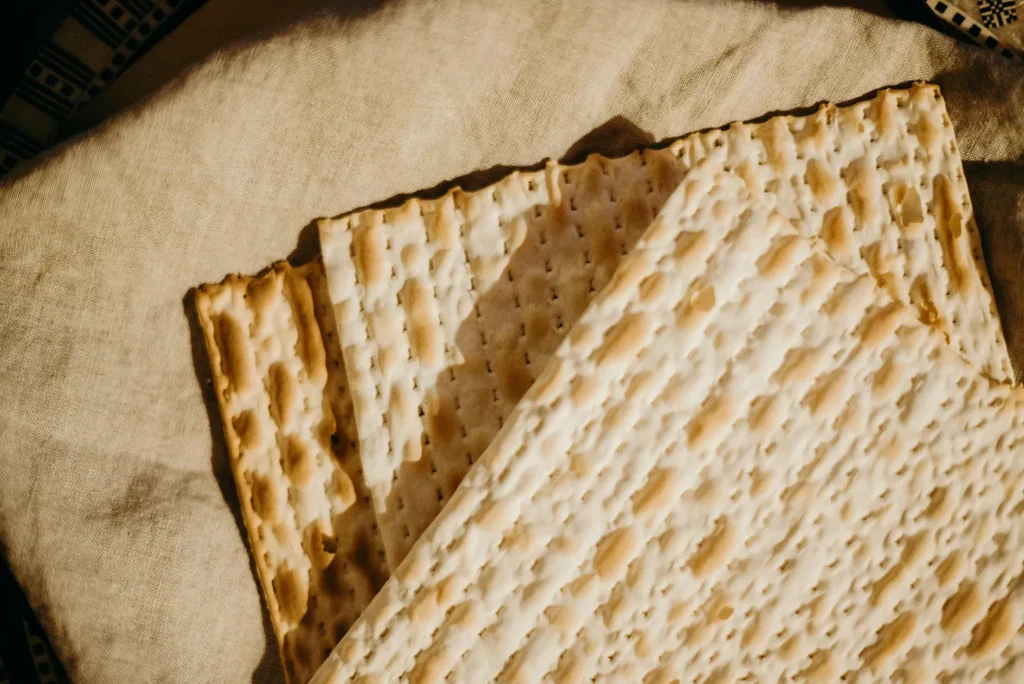
For one memorable Passover seder, celebrated in Liberia, two other Peace Corps volunteers, neither of them Jewish, joined me in feasting on biscuits and Vimto from the Lebanese store in lieu of matzo and Manischewitz. No Haggadah available, we resorted to a volume of Rabelais, and read about Hans Carvel’s ring instead of the exodus from Egypt. I’ve hosted plenty of more traditional seders, but that one reflects my less than scrupulous attitude toward religious ritual. These days I mark Jewish holidays by snacking on matzo on Passover and hamantaschen on Purim, lighting a menorah on Chanukah, and fasting on Yom Kippur, a few vestigial rites of an assimilated, agnostic Jew.
It’s a far cry from how my family celebrated these occasions when I was growing up. My parents took Jewishness seriously. I was born a week before Israel was declared a state, as joyful an event to my parents, I believe, as the birth of their third child. My father emigrated from Poland when he was ten, my mother’s family arrived from Hungary, and the establishment of a homeland for Jews had great significance for them, scarred as they were by the Holocaust and pogroms. Maintaining Jewish traditions and rituals was crucial for them, having come close to witnessing their extinction.
They were Orthodox Jews, relatively moderate in their religious observance. They kept a kosher home with separate dishes and cutlery for milchig and fleishig, dairy and meat, and two additional sets for Passover. I didn’t taste pork or shrimp or wolf down a bologna sandwich with a glass of milk until I left home. We lived in the Bronx among many other Ashkenazi Jews with similar backgrounds and lifestyles. My mother lit candles on Friday night and my father, a yarmulke on his head (we pronounced it yamulkuh), said Kiddush with a glass of concord wine in his hand and a challah in front of him. The meal hardly varied – chopped liver, gefilte fish, chicken soup with lokshen and potato kugel.
On the Sabbath, we weren’t allowed to write or turn lights on or off. The television was kept on with the volume and brightness turned down so we could watch I Remember Mama and more entertainingly, Sgt. Bilko, after dinner, without having to turn the TV on. We attended synagogue on Purim to listen to the reading of the Book of Esther and make noise every time the name of the villain Haman was mentioned, on Simchat Torah, a joyous holiday full of singing and good cheer, and on the solemn High Holy Days, Rosh Hashanah and Yom Kipur when the entire liturgy was droned through in all-day services, the men wrapped in prayer shawls swaying back and forth, the women upstairs or in another section separated by a curtain, and the streets packed with people dressed in holiday finery. When I was young it didn’t occur to me that our neighborhood was different from any other around the country.
Our Passover seders followed a set formula. My father read through the Hagadah in Hebrew, zooming through it, rarely stumbling in his recital, even though he didn’t understand the text. The language issuing from his mouth didn’t sound like the modern Hebrew of Israel; it wasn’t for communicating with others but for davening or praying. We followed the seder rituals meticulously, washing our hands, raising our wine cups, and dipping sprigs of parsley into salt water at the appropriate times. Passover with its different routines and foods was a holiday I always looked forward to, and the drinking of four cups of wine, even if they were tiny, didn’t lessen its appeal. For my parents it was a serious business associated with duty rather than enjoyment, requiring effort, labor and expense to haul out and pack away dishes and replace all the food in the house with items bearing a Kosher for Passover tag.
Like my brother and sister before me, I attended Talmud Torah after school where I learned the aleph-bet and absorbed Jewish lore and law. I enjoyed those classes and when I started third grade in a new school that neither my parents nor I cared for, we made the decision that I should leave public school and attend yeshiva, which I did for the next seven years. There, the first half of the long school day was devoted to Jewish studies. After lunch we had English classes. Latecomer as I was to the school, I was behind the others, most of whom had been there for two years and spoke Yiddish at home. My parents spoke Yiddish mostly as a secret language when they didn’t want the kids to know what they were talking about, and my knowledge was limited to common words like schlep, schmatte, tuchus, nosh, and meshuggah, known by most New Yorkers, Jew and Gentile alike. The remedy found for my linguistic deficiencies was to place me one grade lower in Hebrew than in English, and that is the way I limped unevenly through my studies.
During those yeshiva years I was devoutly religious. I believed wholeheartedly in the existence of God (we wrote it as G-d so as not to take His name in vain), and entertained no iota of doubt that the God of Abraham, Isaac and Jacob was looking over me. I wore my yarmulke, fastened with a bobby pin, day and night, a reminder that God was always present, observing everything I did, hearing everything I said, knowing every thought that passed through my mind. In Hebrew I made my way through morning, afternoon and evening prayers and uttered the appropriate blessings before and after each meal. On the upper right hand corner of every sheet of paper on which I wrote, whether it was a letter or a page of homework, I never failed to place the Hebrew equivalents of the letters B and H for Baruch Hashem, or Blessed be God. I attended synagogue every Saturday and wore a key fashioned into a tie clip so as not to flout the rule prohibiting the carrying of objects outdoors on the Sabbath. I was fastidious about all the minutiae of rabbinic law, insisting that no item of clothing I wore contained shatnez, a mixture of wool and linen. Underneath my shirt I always wore the tassels called tzitzit. I was all in.
As firm as I was in my beliefs, I still felt like an outsider in the yeshiva community. My family wasn’t as religious as my classmates’ and I felt like a pretender trying to fit in. I was embarrassed by my parents because they were less than perfect in their observances. My mother, who took on a job at a department store to help pay the considerable cost of my schooling, joined my father in the mortal sin of working on the Sabbath, and I was mortified by their iniquitous ways, terrified that someone at school would find out. I was absolutely insufferable, but my parents were proud of my religious zeal, hoping I’d become a rabbi.
As I advanced from grade to grade, the Jewish studies grew more complex and involved. At first we read the chumash, starting from Genesis, translating into English. Later the translation was to Yiddish and included commentaries by Rashi. Then the Talmud was added to the syllabus, huge tomes consisting of mishnah, an elucidation of biblical law, and gemara, commentary and disputation about that text. The confusing babble of Hebrew, Aramaic and Yiddish, none of which I had much facility in or could even always distinguish from one another, overwhelmed me. Even in English, the texts didn’t always make sense. As I recall it now, years of my life revolved around discussions of who is liable if an ox strays into a neighbor’s yard and gores another ox, or if someone digs a hole into which an ox falls and is killed or injured. None of my neighbors owned oxen, and the only holes I came across in New York were those dug by Con Edison, heedless to the potential danger to oxen, insisting in their ubiquitous signs, “Dig we must.” What I was learning had little meaning for me, and the difficulty of the studies along with an oppressive atmosphere thick with commandments and prohibitions wasn’t made easier by the onset on puberty.
After ninth grade, yeshiva and I had enough of each other, and I was thrust back into public school as a high school sophomore, feeling as much an outsider there on account of my parochial school background as I had felt in yeshiva. After so many years of gender-segregated schooling, I wasn’t used to a co-ed environment, didn’t know how to act around girls, and couldn’t keep from thinking about them. My resentment at having been deprived of a normal childhood helped turn me against my once deeply held religious beliefs as did the growing conviction that I’d been duped into putting my faith in a loving God deeply concerned about my personal well-being.
A developing awareness of the world beyond the yeshiva and the Bronx made me question the likelihood that I was a member of a small group of Chosen People who, alone of all humankind, God actually gave a damn about. I recognized that some of the rabbis who taught me weren’t the finest people to walk the earth, and no longer took for granted a correlation between religious piety and moral goodness, or that following a rigid set of trivial and obscure commandments insured righteousness. The spirituality I craved was absent in the religious training I had, structured as it was around a ferocious God obsessed with obedience and demanding repeated proclamations of how great He was, more like an earthly despot than a divinity. My disenchantment with the religion that had played such a large role in my life was both visceral and intellectual, fueled by my failures and follies as much as by rational thought and a desire to give my life meaning.
While my active involvement with Judaism as a religion ended with my withdrawal from yeshiva, I was still connected with other aspects of Jewish culture. Instead of taking French or Spanish to fulfill my high school foreign language requirement, not for the first or last time in my life I opted for what I thought would be easier and took Hebrew for the next two years. Beyond that my Jewish identity didn’t play much of a role in my life until I arrived in Israel a year after the Six-Day War. Going there wasn’t the result of a yearning for the homeland or a rebirth of my religious ardor. Having dropped out of college before the end of my junior year, I was hitchhiking around Europe, making my way through Italy to the Greek isles, and my money was running out. On a boat in the Mediterranean I heard from fellow vagabonds that one of the few places it was possible to work abroad without a visa was on a kibbutz. It was that or try to sell my blood in Istanbul, and that’s how I ended up in the ancestral land.
My initial contact wasn’t auspicious. Israel remains the only country I’ve ever visited that tried to bar my entry. It was partially due to the fact that when I boarded the plane in Athens there was no covered gangway and I had to make my way down the tarmac in a heavy downpour. I was soaked through and still disheveled when I landed at Lod, where I was questioned about my reason for being there and asked to show names and addresses of relatives in Israel who could vouch for me. I was surprised, having heard that Jews from anywhere in the world could claim citizenship and call Israel home. Not much of a homecoming, but I did have the requisite references and was allowed to enter.
I wasn’t aware of it at the time but Israel was trying to check the onslaught of hippies entering the country who encamped in Eilat and other scenic spots. I was singled out for interrogation even though I was traveling with a suitcase rather than a backpack, and wearing a sports coat, albeit wrinkled and rumpled after getting drenched, and had taken nary a puff on a reefer up to that point in my life. I wasn’t a hippie when I arrived in Israel and thought of myself as a loner rather than a member of any group, but could pass for one two years later when I departed, having ingested during my stay in the Holy Land as large a quantity of hashish and hallucinogens as any of my counterparts back home or serving in Vietnam.
After a short stay at a kibbutz up north, where tourists and other visitors were not part of the community but treated more like migrant workers, I moved to another one which had a contingent of Americans who emigrated from the US during the Korean War. There was also a group of new arrivals composed mostly of Americans who’d been preparing for aliyah or immigration for years at a Zionist camp in New Jersey, into which I was naturally absorbed. Kibbutzniks viewed me as part of the group, called a garin or seed, which would constitute the next generation of workers. The garin members accepted me as one of them, and I felt like one of them, too. We were the same age and had similar backgrounds. All I lacked was the same ideological training and expectation of remaining in Israel for the rest of my life. It was a formative experience, living and working in such close proximity with others, but not one which I was inclined to prolong indefinitely.
I was comfortable around the Americans and also the Europeans in the kibbutz, many of them concentration camp survivors and war refugees, but had less in common with the sabras, native-born Israelis, most of whom were veterans of the Six-Day War, strong, proud, nationalistic and very different from the laid-back, academic, anti-war crowd I was accustomed to. As kibbutz children, raised by the community as much as by their parents, they weren’t necessarily representative of all Sabras.
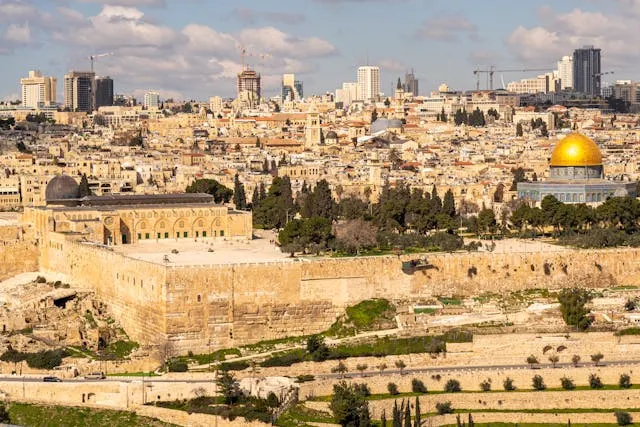
After a year on kibbutz it was time to move on, but I faced the same problem that brought me there in the first place: lack of money. I’d received no compensation beyond room and board and vouchers for use in the kibbutz store. I managed to get to Jerusalem where I stayed a year, busing tables in the bar of the renowned King David Hotel before enrolling for classes at Hebrew University, living first in the ultra-Orthodox Jewish neighborhood of Geula and then in a friendlier Arab neighborhood near the Damascus Gate, which looked like Disneyland lit up at night.
***
Despite my Jewish upbringing, religious education, and sojourn in Israel, all of which, no doubt, left their marks on my character, it doesn’t seem to me that being Jewish has been that much of a factor in my adult life. It didn’t determine my vocation, where I lived, or who my friends were. I don’t recall ever feeling discriminated against because I was Jewish. Once, during the height of the hostage crisis in Iran, someone yelled, “Go home, you fucking Iranian!” at me from a car window as I crossed the street in friendly Iowa City, where I did my graduate work. I guess it was my complexion—I used to tan easily. In Israel, I was sometimes mistaken for an Arab. One time, hitching a ride up to the kibbutz, a bus stopped for me. I was delighted and was about to step in when the driver started questioning me. Satisfied that I was a dumb American and not a dangerous Arab, he shut the door in my face and drove on. So, while never a target of antisemitism, I did experience bias because of mistaken identity. I wasn’t harassed for being Jewish the way my Korean wife or children with mildly Asian features have been for their appearance.
As the only Jew in my small department in grad school, I was never treated unfairly because of my ethnicity, which I neither advertised nor hid. The only other Jewish person around was my girlfriend—we’d been together since kibbutz days. Although American, she went by her Hebrew name, which people often asked about and liked her no less on learning she was Jewish. We had some difficulty adjusting to Iowa weather, and getting used to people saying “pop” instead of “soda” and “sack” instead “bag”, but neither of us experienced problems because we were Jewish.
Several years in, another Jewish student from “back east” briefly joined the department. He was an irritating fellow who rubbed everyone the wrong way, but was convinced that people didn’t like him because he was Jewish. In the end, he brought a discrimination suit against the university. When he complained to me about how he was treated, I recall saying to him something like, “The only person here who doesn’t like you because you’re Jewish is me.” It was true. I didn’t want to be tainted by his obnoxiousness and unpopularity. I’m sure he sincerely believed he was the victim of bias, but I believed he was disliked on his own merits and not because he was Jewish. If someone reacts negatively to me, I tend to attribute it to something about me personally rather than ethnicity. But we’re all different, and just as we vary in our tolerance of pain, we differ in how we interpret the way people react to us.
Persecution is a prominent fixture in the Jewish psyche, and even if one brushes aside such events as the destruction of the temples by the Babylonians and Romans as ancient history, which they are, the Holocaust is too recent and too devastating not to have left its mark on just about everyone of Jewish heritage. Sensitivity to discrimination is justified by history, but as in the case of my colleague in grad school, spurious accusations of antisemitism can be detrimental to those falsely accused and to the wider Jewish community. They also provide cover for real, more malignant forms of antisemitism. What happened to Representative Ilhan Omar in 2019 when she tweeted about money influencing US policy on Israel is a case in point. She was pounced upon by political foes as well as a number of Jewish entities who branded her as antisemitic and called for her censure. In fact, she said nothing derogatory about Jews, Judaism or the state of Israel.
Representative Omar was targeted as a threat to American Jewry by the very people who posed an actual threat to Jews and other minorities. I was appalled to learn that (now former) Congressman Engel from my parents’ district in the Bronx, and Jonathan Greenblatt of the Anti-Defamation League (ADL), who should have been in the forefront defending Omar, were pressing the attack against her. Labeling as antisemitic her criticism of pro-Israel lobbies showering US politicians with money was a dangerous trivialization, politicization, and weaponization of the term antisemitism that I, as a Jewish American, found particularly galling. The new definitions gaining currency of what constituted antisemitism and what it meant to be Jewish rattled me because they played on my own doubts and threatened to deprive me of an important aspect of my identity.
On the face of it, I’d become one of the vilest things a person can be according to Jewish lore: an apikoros. Either from the Aramaic word meaning “to abandon” or connected to the philosopher Epicurus, the word hadn’t been explicitly defined by the rabbis who taught me, but its meaning was clear as they hissed it out: a heretic, an apostate, someone who turns against his own people and heritage, someone who denies God. I guess I fit the bill. Every box could be checked off. I stopped believing in the God of my forefathers, in the holy Torah, in the idea of being one of the Chosen People. I generally bucked Jewish traditions and voiced criticism of Israeli policies. To top it all off, I married outside the faith, a forbidden act according to Jewish law, requiring the prayer for the dead to be recited over the offender. How, in view of all that could I consider myself a Jew?
The answer is simply that I am. Genetically, I come from Semitic, Ashkenazi forebears. That’s the least of it, though. I couldn’t shake my Jewish identity if I wanted to—it’s ingrained in my being. It’s the way I was brought up and can’t be undone. Similarly, I remain a native New Yorker even though I haven’t lived there in over half a century. Growing up in a Bronx tenement isn’t just a memory for me, but part of who I am. Likewise, I remain American regardless of where I am and how much I rail against American policies and culture. It’s when I travel to foreign countries that I feel most American, and lesser identifiers such as my state of birth and ethnicity fall away. When I lived in Korea and Liberia, I was the American—not the Jewish guy or the guy from New York. Despite my agnosticism and all the other ways I have deviated from Jewish laws and customs, I remain a Jew. Just as with my nationality and place of birth, I never chose to be Jewish, but it’s not something I can un-become. It was with these thoughts swirling around my mind that I penned the original version of this essay in 2022. In re-writing it now for this post, I’m trying to take into account the cataclysmic events that have occurred since then.
When I first heard about the October 7, 2023 Hamas attack, I didn’t know the terrible details. My first reaction was to wonder how many Palestinians would die for each Israeli killed. That was a dim but deserved view of Israeli policy, based on past actions, but what came to pass was far worse than anything I could have imagined. The airwaves rang with denunciations of Hamas for the atrocities they committed, which was understandable, but I was confused by the insistence of many to compare the attack to the Holocaust. The Hamas attack killed twelve hundred people, not six million, and more to the point, it more closely resembled the uprisings of oppressed people against their oppressors than an attempt by a powerful state to exterminate a portion of its citizens. Absurd arguments raged about who was to blame, who the real victims were, and whether people should be pro-Israel or pro-Palestine. I was as outraged by those excusing the slaughter of Palestinians as those calling for the destruction of Israel.
Reactions of Jewish Americans to the Hamas attack and Israel’s retaliation ranged from Norman Finklestein’s all-Israelis-are-murderers attitude to Chuck Schumer’s Israel-is-never-wrong stance. The role of the US in supplying weapons for the slaughter of Palestinians and decimation of Gaza, and in providing political support made matters worse, and I started writing a novel to sort out and express my feelings. In a sense, the novel was a continuation, in a different form, of my essay about identity and belonging. For the next year I was absorbed in the lives of my characters while I funneled my reactions to what was happening in the world into my fiction.
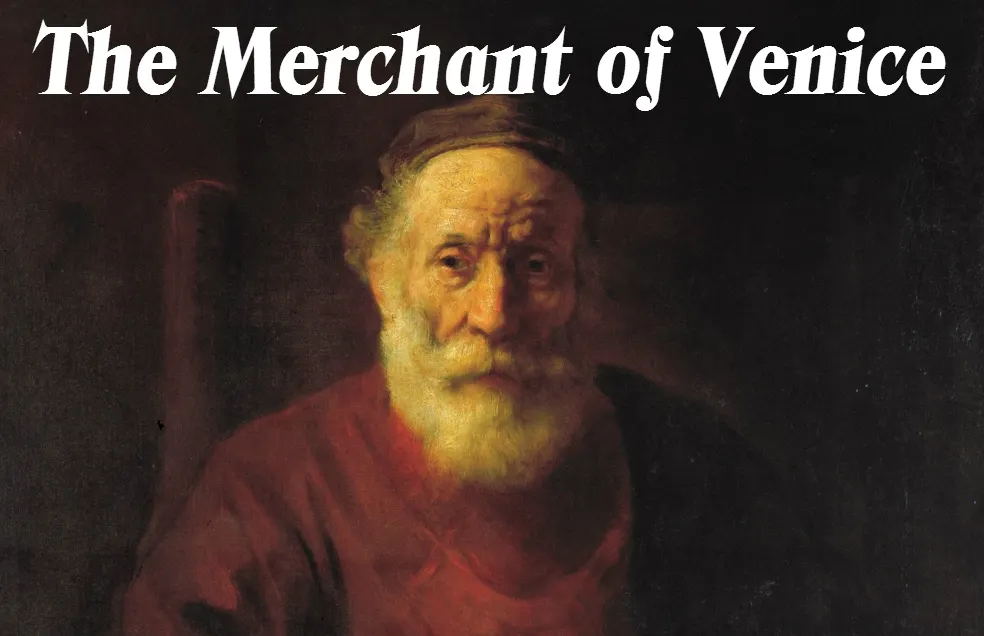
The Merchant of Venice provided the inspiration, plot elements, and characters for my story. Shakespeare’s play is famous for evoking very different reactions from different people in different eras (a wonderful and engrossing book that traces the origins of the Shylock character and how it has been interpreted and perceived through the ages is Shylock: A Legend and Its Legacy by John Gross) Nazi Germany considered it a useful vehicle for spreading antisemitic propaganda, and NYC public schools banned it for the same reason. Heinrich Heine, on the other hand, thought it “vindicates an unfortunate sect.” He viewed Shylock as “the most respectable person [excepting Portia] in the whole play,” and lambasted Antonio, the eponymous merchant as “a poor-spirited creature…with the heart of a worm,” (quotations are from the Bantam paperback edition of the play). For me, the character of Shylock was especially compelling because as both victim and villain, he aligned with my own fluctuating feelings about Judaism in the course of the tragedy unfolding in Gaza. The contrasting attitudes of Shylock, who accepted the burdens of his birthright, and his daughter, Jessica, who was desperate to assimilate and free herself from the degradation her ethnicity made her heir to, was a theme of my story. I wondered what happened to Shylock after he was stripped of his religion. If Shylock the Jew was no longer a Jew, who was he? The exploration of identity and belonging formed the backbone of the tale.
By the time I completed the novel, real events made it seem less relevant than when I was immersed in it. It had become clear that Israel was engaged in ethnic cleansing and genocide, ignited by an attack that may have been intentionally permitted if not instigated by Netanyahu. Not only were survivors of a genocide capable of perpetrating a genocide of their own, but Israel’s response to the Hamas attack could more accurately be compared to the Holocaust than the attack itself. The ironic plot point of the novel—a Jewish student facing expulsion from college for advocating for Palestinian rights had become a commonplace in the real world. The term antisemitism had been distorted to mean anti-Zionist and anti-Zionist was taken to mean anyone who criticized Netanyahu or boycotted products made in Israel. Jews in America are regularly labeled antisemites by bigots for stating the obvious fact that Israel is carrying out a genocide. Not only had Israel become unrecognizable from a state founded as a haven for the oppressed, but the USA, that quintessential beacon of democracy, had ceased to be a democracy.
So much of the chaos of the current moment has come about because people with a pathological need for power have been able to attain it by convincing a significant portion of the populace that their enemy is the Other—people unlike themselves in some trivial but recognizable way. We’re at the precipice waiting to see if we will destroy ourselves or come to accept and celebrate the differences that distinguish us from one another and make us unique. If I participate in another Passover seder and raise to my lips the bitter herb on a piece of matzo dipped in sweet charoset, it won’t be as a reminder of the awful retribution wrought on the enemies of my forebears when they were slaves in Egypt, but in the recognition that ritual is meant to bring us together in the bitterness and sweetness of our lives.
2022 original essay, revised 2026