

Non-Fiction
5786
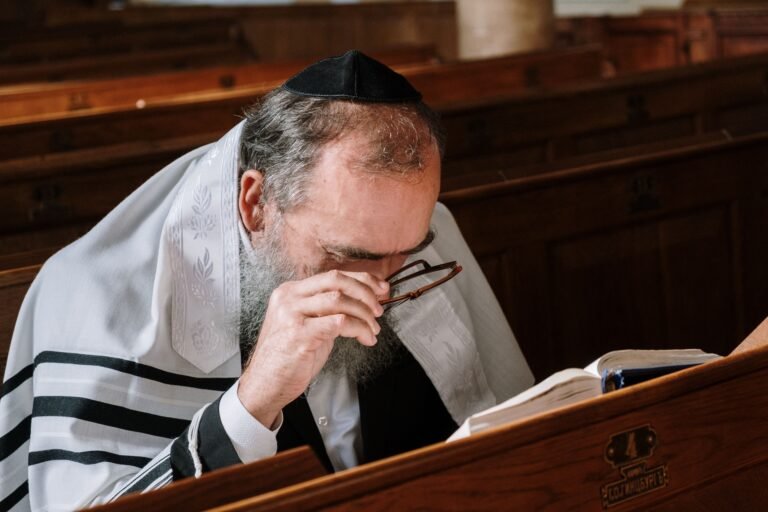
Rosh Hashanah, the Jewish New Year celebrated last week, marked the beginning of the year 5786. The Messiah, ushering in an eternal period of peace and brotherhood around the world, is supposed to arrive by the year 6000, but the way things are going, he better get a move on or everything will be blown to smithereens before he gets here. Rosh Hashanah is a somber holiday, not celebrated with parties, drinking, and flamboyant fireworks, but with prayer and penitence. Yom Kippur, the Day of Atonement, follows shortly after Rosh Hashanah, and it is an even more solemn holiday, characterized by dread rather than joy, with much smiting of the breast and fasting. During these High Holy Days, it is believed that G-d (as it is written by the devout, so as not to take His name in vain), decides the fates of everyone for the coming year, as described in these verses of Unetanah Tokef, one of the most poignant prayers in the Jewish liturgy:
On Rosh Hashanah it is inscribed, and on Yom Kippur it is sealed – how many shall pass away and how many shall be born, who shall live and who shall die, who in good time, and who by an untimely death, who by water and who by fire, who by sword and who by wild beast, who by famine and who by thirst, who by earthquake and who by plague, who by strangulation and who by lapidation, who shall have rest and who wander, who shall be at peace and who pursued, who shall be serene and who tormented, who shall become impoverished and who wealthy, who shall be debased, and who exalted. But repentance, prayer and righteousness avert the severity of the decree.
We come from dust, and return to dust. We labour by our lives for bread, we are like broken shards, like dry grass, and like a withered flower; like a passing shadow and a vanishing cloud, like a breeze that passes, like dust that scatters, like a fleeting dream. But You are the king who lives eternal.
The intervening days separating the two holidays are known as Aseret Yemei Teshuvah (The Ten Days of Repentance) and Yamim Noraim (The Days of Awe, or Days of Dread). It is a time to look deep inside ourselves, recognize our transgressions and shortcomings, and ask forgiveness from God and from everyone we intentionally or accidentally harmed. There’s a lot riding on it. If you were naughty during the past year Santa may leave you a piece of coal instead of the gift you’ve been craving, but the Hebrew God will strike you down or inflict unimaginable suffering on you.
Kol Nidre, a rather legalistic prayer asking for the annulment of any debts, vows or promises one made and failed to fulfill the previous year, kicks off the Yom Kippur services. It might be the best known Jewish prayer because of its beautiful melody, and because it was performed by Al Jolson in the penultimate scene (it should have ended there because, in the final scene, Jolson appears in blackface—ugh) of the early talkie The Jazz Singer. BTW Jolson’s father in the movie is Warner Oland, the Swedish-American actor who played Charlie Chan in so many movies. The Yom Kippur service ends the following evening with the blowing of the shofar (ram’s horn), the breaking of the fast, and life going back to normal with everyone’s fate decided, signed, and sealed for the coming year.
During the High Holy Days this year, my mind is on the inhumane, obscene holocaust wrought by Israel for almost two years, which has already taken tens of thousands of lives. In this season of repentance, during these Days of Awe, hundreds have been killed, and many more maimed and displaced at the hands of a nation founded on religious identity. Surely this cannot be pleasing to God, yet many who defend this slaughter and devastation, in Israel and here in the US, see themselves as pious and God-fearing. Some pray for hours on end and pore over the Torah and Talmud, parsing the finest details and arguing over such niceties as what activities are permitted on the Sabbath, yet seem unbothered by the killing of innocent children and infants. This must be the most extreme case of not seeing the forest for the trees! How can people so obsessed with obeying the word of God that they would die before letting a morsel of food that isn’t kosher enter their mouths or pass through a doorway without kissing a mezuzah, accept the atrocities that are being committed in their name?
Somehow, it happens. A couple of weeks ago, the president of Yeshiva University, posted this video. When the same faith leader delivered a benediction at the inauguration earlier this year, it got my attention. As a ninth grader, I attended a high school affiliated with Yeshiva University (YU), a selective and academically rigorous institution—so much so, in fact, that I dropped out after one year, transferred to a public high school, and shortly afterwards turned decidedly agnostic. I wondered why a rabbi and a scholar from a distinguished institution would back someone who spouts antisemitic rhetoric and befriends neo-Nazis, and who is so thoroughly antithetical in all respects to everything my yeshiva education taught me was admirable.
In the video linked above, this man of faith prays for the release of the hostages held by Hamas and for the safety of Israeli soldiers, but not a word about the plight of the Palestinians. At a time when state violence in the US should alarm everyone, the one instance of violence he addresses is the unfortunate killing of a man who advocated intolerance. How could this rabbi, a learned, intelligent man steeped in religious scholarship and lore be so morally bankrupt? I can’t help wondering whether the faculty and students of YU are proud of their leader and feel he epitomizes what it means to be a pious Jew. There among them, but for the grace of I-don’t-know-what, might I have been, because that was the life I was being groomed for.
What is religion for, if not to teach us morality and how to act humanely toward others? If the God we worship cares only about how much praise we heap upon Him and how diligently we perform elaborate rituals, but not about how we treat our fellow man, then He is an immoral God, not worthy of our respect, and religion is nothing more than a collection of meaningless observances and practices that obscure rather than promote spirituality and human decency. This post is not meant as a diatribe against Israel, or against religion, but against the misuse of religion by those seeking personal gain or power over others. Religion, because it presents itself as the highest moral authority, that cannot be questioned or challenged, is uniquely susceptible to abuse, and becomes a dangerous tool when it is hijacked, as it often is, by those wishing to use it for their own purposes. On Yom Kippur, which begins tonight, I won’t be going to a synagogue to pray, but maybe I’ll fast and try to become a more patient, more caring person, and maybe even try to temper my animosity towards those who use religion to turn our miraculous existence in a world full of marvels into a living hell.
October, 2025