

Non-Fiction
Near Death Experiences
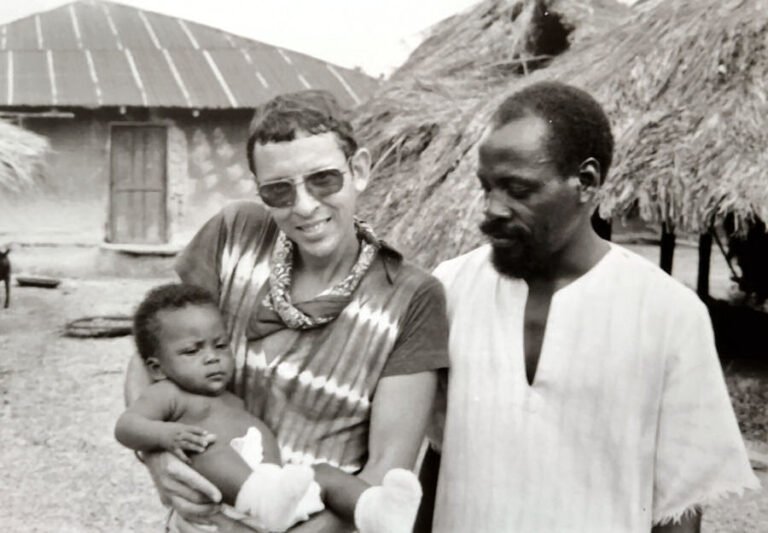
“How’s he going to kill me?” is what Michael Lewis (author of Moneyball etc.) asked himself in 2017 as he watched footage of Donald Trump entering the White House. Even though I considered the 2016 election on a par with such national disasters as 9-11 and the JFK and MLK Jr. assassinations, I can’t say that particular thought entered my head. With Trump’s second coming, however, thoughts of the many ways in which he might kill me have proliferated, and that, perhaps, is what got me thinking about past near death experiences. I imagine that everyone who’s reached adulthood has, one time or another gasped, “Boy, that was a close one!” I can think of a number of times I uttered words to that effect, but there’s one that still haunts me because it would have been a particularly gruesome way to go, sure to be talked about, with a snicker, for a long time. It occurred in the early 80s when I was a Peace Corps volunteer in Liberia, West Africa.
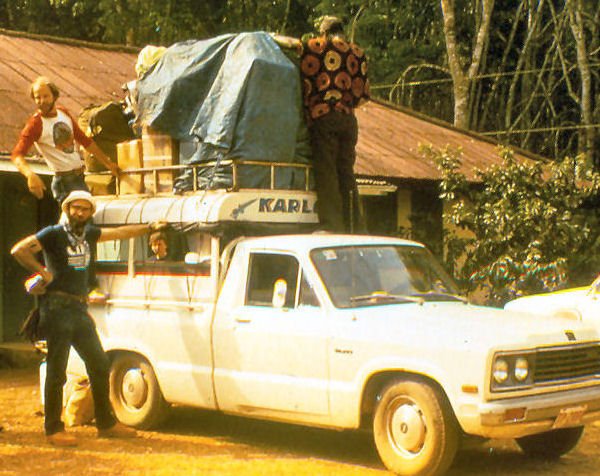
There were numerous times I might have died during my two-year stint, starting with the shaky landing of the Pan-Am flight that brought us to Monrovia. Several vehicular incidents in Liberia might have brought about my demise, as well, as all travel depended on Toyota pickups in various states of disrepair (the one above which first brought me and other volunteers to our designated sites looks spanking new). These money buses, bearing names like Disco Boy, Next Time Different Jack, and God Will Provide and fitted with plank benches, crammed with at least a dozen passengers and assorted livestock and piled high with all manner of goods, navigated “roads” that were either so dry that everyone and everything inside were coated in a thick layer of red dust, or so rutted and ravaged by rain that everyone had to get out and push. Despite some harrowing incidents and sometimes spending two days to reach a destination 30 km away, miraculously I never experienced a serious accident.

My site was deep in the interior (the domestic scene above is from a nearby village), and like every part of the country except for Monrovia and Harper, had no electricity or running water. That sounds like a terrible hardship, but in fact, life was blessedly simple. I had my rain barrel for showers and a supply of batteries for my flashlight and radio that brought me news from the BBC. I think life was more stressful in the places with electricity, because it was sporadic and completely undependable. I didn’t even have a kerosene fridge which some volunteers did, and had no great need for one. My house was comfortable and had everything I needed, with a two-seater outhouse a short walk away through the bush.
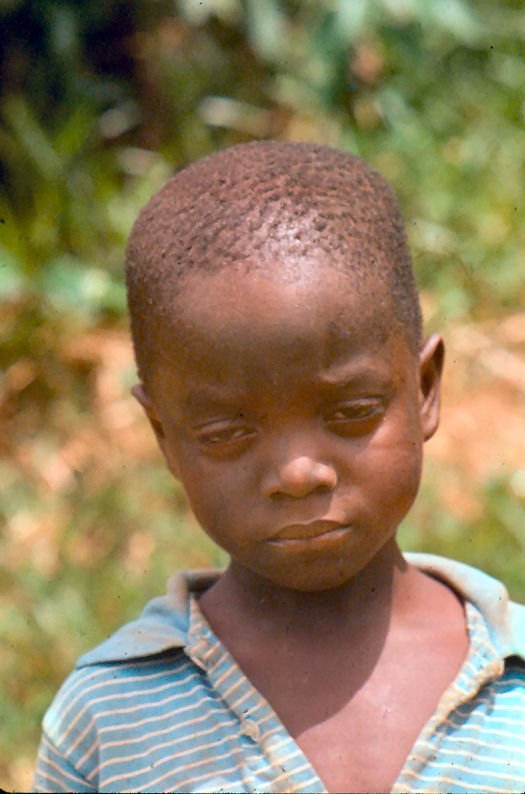
I got malaria a few times (the sleepy-looking fellow above is probably suffering from malaria), despite daily doses of chloroquine (maybe that’s what’s kept me COVID-free so far), and one time my fever was high enough to make me delirious, something I experienced just that one time. It was another illness, giardia, that almost did me in, but in a roundabout way. Giardia is an intestinal infection caused by a parasite and results in severe cramps, raging diarrhea, and frequent expulsions of gas from various orifices with the reeking rotten egg odor of sulfur dioxide. It’s an unpleasant illness but something you can get over in a few days. I was unlucky enough to have a bad bout of it in rainy season.
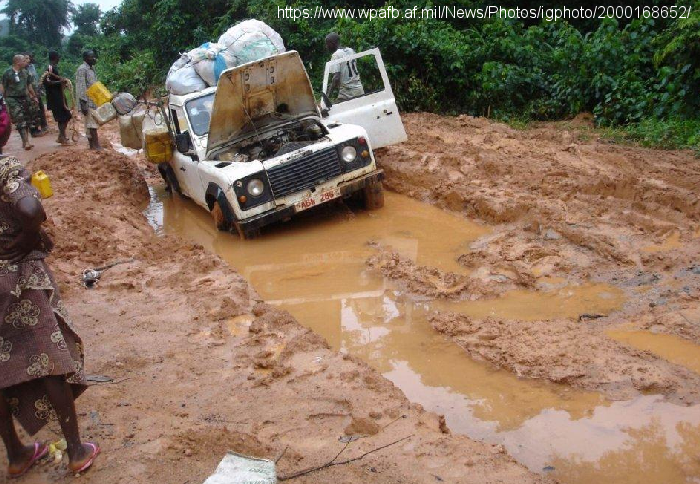
I live in the Pacific Northwest which is renowned for its rain, and it does seem like it rains for at least eight months of the year. Portland gets about 36” of rain a year. Monrovia, in contrast, gets over 200” and when it rains, it really rains (the picture above isn’t mine, but it’s Liberia). It’s impossible to hold a conversation in a house with a tin roof when the rain is beating down on it. It’s also inconvenient to have to walk through the rain to the shitter every fifteen minutes, but that’s what I had to when I had giardia. It was especially hard at night, walking through the bush with an umbrella in one hand, a dim flashlight in the other, and an urgent need to reach the outhouse. I’d barely get settled in bed when I’d have the urge to go again.
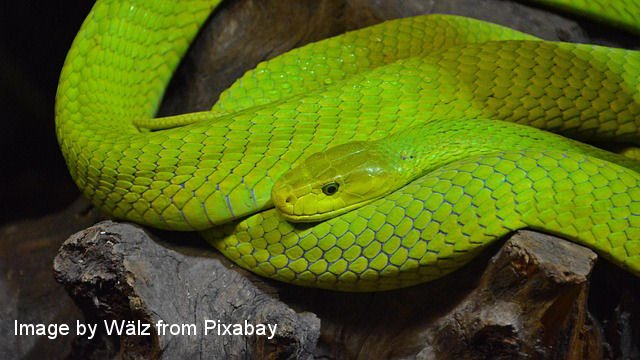
I’m not one of those people who are blasé about snakes. I don’t have the fortitude of the other PC volunteer in my town who told me about the time she was sitting in her outhouse and realized there was a spitting cobra sharing the facility with her. I always made it a point to peer down into the hole before taking a seat on the shitter. Liberia is a poor country, but is fantastically rich in venomous snakes. Among others, there are cobras, black mambas, green mambas (above), and the large but sluggish cassava snake also known as the gaboon viper, said to have the longest fangs of any snake. I had the skin of a cassava snake hanging in my house. Some students came across it and killed it when they were cutting the grass behind my house and presented me with the trophy. During orientation in Monrovia, a herpetologist who milked snakes spoke to us. He especially warned us about the green mambas that were lightning quick and so aggressive they regularly attacked moving vehicles. He himself almost died from a green mamba bite. After being bitten, he told us, you have a feeling of “inappropriate euphoria,” a phrase which has stuck with me all these years. Not a bad way to go, I guess. I wonder if that’s what Aldous Huxley felt on his final trip fueled by a 100mcg injection of LSD.
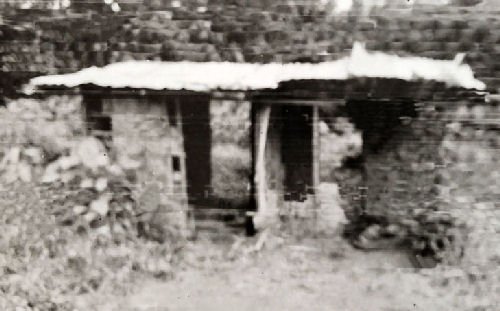
Anyhow, I was seriously worried about snakes as I stumbled through the brush with my dimming flashlight every quarter of an hour or so. It was a ridiculous thing to do, but what choice did I have? When you have to go, you have to go. When you do something often enough, it becomes routine, and the anxiety I felt on my first forays gradually dissipated. But towards morning something strange happened. I made my way to the outhouse (shown above) as usual as I had done so many times that night, and it wasn’t there. I figured I must have taken a wrong turn and retraced my steps, but the structure had simply vanished. I couldn’t understand it. I’d been there dozens of times that night and not more than twenty minutes earlier, and now it was nowhere to be seen. Then, with the sun starting to rise, I saw what had happened. The hut had collapsed into the hole it was built over. It was a miracle that it had fallen when I wasn’t in it. If I had been in it, I don’t think I would have survived. My students would wonder what had become of their teacher. I would have been buried in the muck and I don’t know when anyone would have found me or my remains, especially if the ubiquitous driver ants got to me.
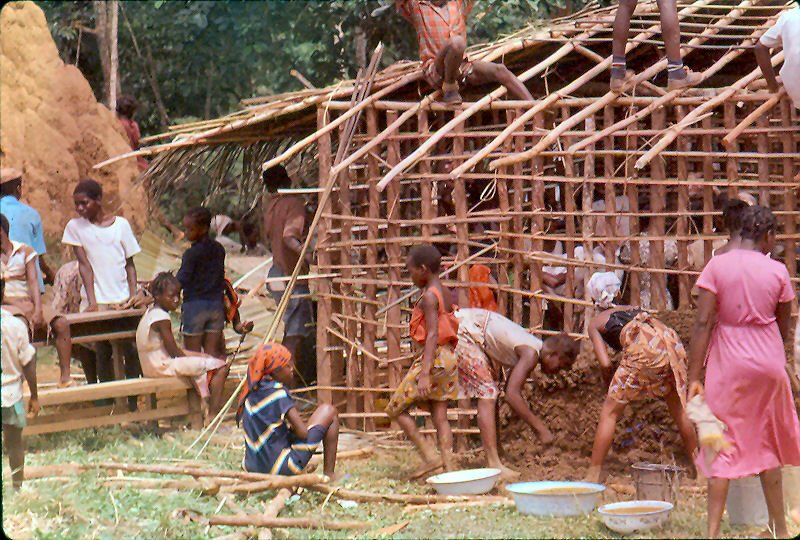
I am not kidding or exaggerating when I say it was a miracle that I wasn’t buried there. It should have collapsed because of the extra weight when I was occupying it, and I was in it almost as much as I wasn’t that night. I thought about it over the next several weeks, waiting for a new facility to be constructed, as I relieved myself near the collapsed privy, holding an umbrella. Structures are built with wooden frames packed with mud, much of it from bugabug (termite) hills (in the photo above students are building a mud-and-stick hut and a bugabug hill can be seen in the background). Termite mounds provide a particularly fine material for building, but also termite eggs that hatch and eat away at the new structures they are part of. It’s a neat, symbiotic relationship between insect and man that was responsible for the collapse of my outhouse and a near death experience that still keeps me, a confirmed atheist, wondering what beneficent spirits were watching over me during that long, arduous, stinky night.
May, 2025