

Non-Fiction
Oh God
The Bible tells us that God created man in His own image (Genesis 1:27), but surely it’s the other way around, as the pre-Socratic Greek philosopher Xenophanes of Colophon (c. 570 – c. 478 BC) asserted. He proclaimed that people made gods as copies of themselves, and that’s why Ethiopian gods have flat noses and black skins while the Thracian gods have red hair and hazel eyes. He speculated that if horses, lions and oxen could paint or sculpt, their gods would look like horses, lions and oxen. Does it really matter if man is godlike or god manlike when the end result is that there are lots of similarities between the divine and human entities?
In the case of the Greek pantheon, the human qualities of the gods are evident. The gods may have boundless power and rule the heavens and the seas, but otherwise they’re just like ordinary folk, having the same flaws and weaknesses as humans. Zeus, for example, may be the top deity, but he’s an inveterate philanderer and, like many other gods and goddesses, is as hopelessly and unsuitably attracted to mortals as the Epstein crowd is to underage girls. The gods are always up to mischief which usually ends up causing people grief. Still, they’re an affable lot, and if being near them wouldn’t put a mortal in peril, we’d probably enjoy having a cup of coffee with them. Even if their motives aren’t always admirable, we can’t blame them for having the same faults we do. We can understand their behavior because it’s so like our own.
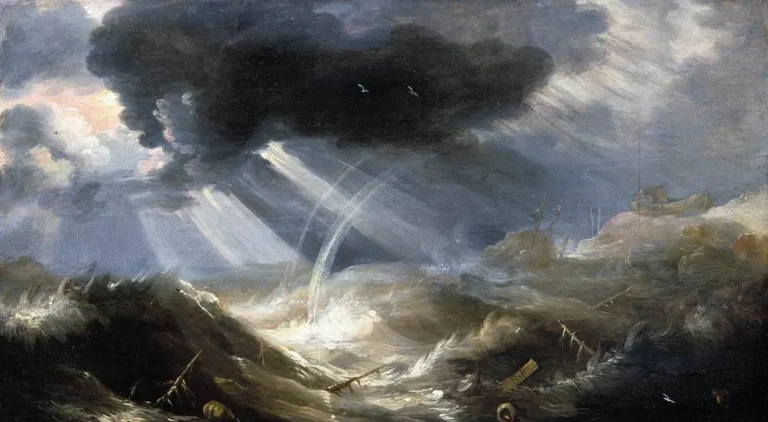
That’s not the case with the God of the Old Testament. Oh, no, you wouldn’t think of sitting down for a cuppa with Him. He’s a scary, fearsome God, a consuming fire. He may be called just, merciful, and slow to anger, but that’s only flattery and is contradicted by the tales the Scriptures tell. His hair-trigger temper led him to kick Adam and Eve out of the Garden of Eden right after taking so much trouble setting it up for them, and then He almost drowned out the whole of his creation in the Flood. Talk about cutting off your nose to spite your face! What benefit did He derive from those acts? If his creations didn’t behave in the way He wanted them to, shouldn’t He take some of the blame? After all, He created them with the flaws that caused their disappointing behavior. What would you think of a programmer who blamed his applications for failing to function as planned, instead of taking responsibility for the coding errors that caused the problem?
The thing about the OT God is that we wouldn’t much care for a fellow human who behaves the way He does. He’s violent, jealous, petty, bad-tempered, arbitrary, full of Himself and totally devoid of a sense of humor. He’s boorish, tyrannical, and kind of trumpy—not someone you’d want to hang with. He may not have the voracious sexual appetite of the Greek gods, but that doesn’t make Him a paragon of good behavior. Maybe a little skirt-chasing would mellow Him out a bit. Why was He so bent out of shape by Adam and Eve eating the fruit? Did He really fear that it would make them too much like Him. Why did He feel so threatened by those fellows in Babel who were building a tower? The first three of His Ten Commandments relate to how people should behave toward Him. For someone billed as the mightiest of the mighty, He sure seems insecure. Maybe He had a rough childhood.
We don’t know for certain if the Iliad and Odyssey, the sources of so many Greek myths, were written by a blind itinerant poet named Homer, but it seems that its purpose was to entertain. The Old Testament, by contrast, while it’s as full of wonderful stories about past events as the Greek tales, is quite different in tone and purpose. The Iliad, a story of war full of gruesome details of battle, nevertheless manages to show a playful side and applaud love, but there’s no playfulness in the Bible. While the literary qualities of the Bible are superlative, it seems less about art than politics and molding behavior. It serves, in fact, as a playbook of patriarchy and authoritarianism, expounding on the main theme that God is all-powerful and demands to be obeyed and venerated, and never to be questioned or doubted.
The underlying message is that what is true for God, is also true for other authority figures, including parents and those seen as God’s emissaries. Consider Noah, the one figure God thought worthy of saving when He decided to destroy the earth and everything on it. Virtuous Noah gets drunk shortly after his forty-day cruise and prances about naked, and when his son sees him in that state, he curses him and all his progeny through the ages. The message is clear: respect authority. Maybe what God liked about Noah is that he was a chip off the old block. To be good in God’s eyes means to be obedient and servile to Him. If He tells you to slit your son’s throat, or to wipe out the Canaanites and Amalekites, every man, woman and child, you don’t question or hesitate but hop to it.
Despite Zeus’s prodigious appetite for amorous adventures, there is no claim that we are his progeny, but the Good Book tells us we’re all God’s children. I know that’s supposed to bring us joy and comfort, but considering how God is portrayed in the Old Testament, it goes a long way in explaining why we’re as messed up as we are.
A while back I tried to get into God’s mind a bit and figure out why He created everything in the first place, and I wrote this piece of doggerel and set it to music.
February, 2026