

Non-Fiction
Pieces of the Past
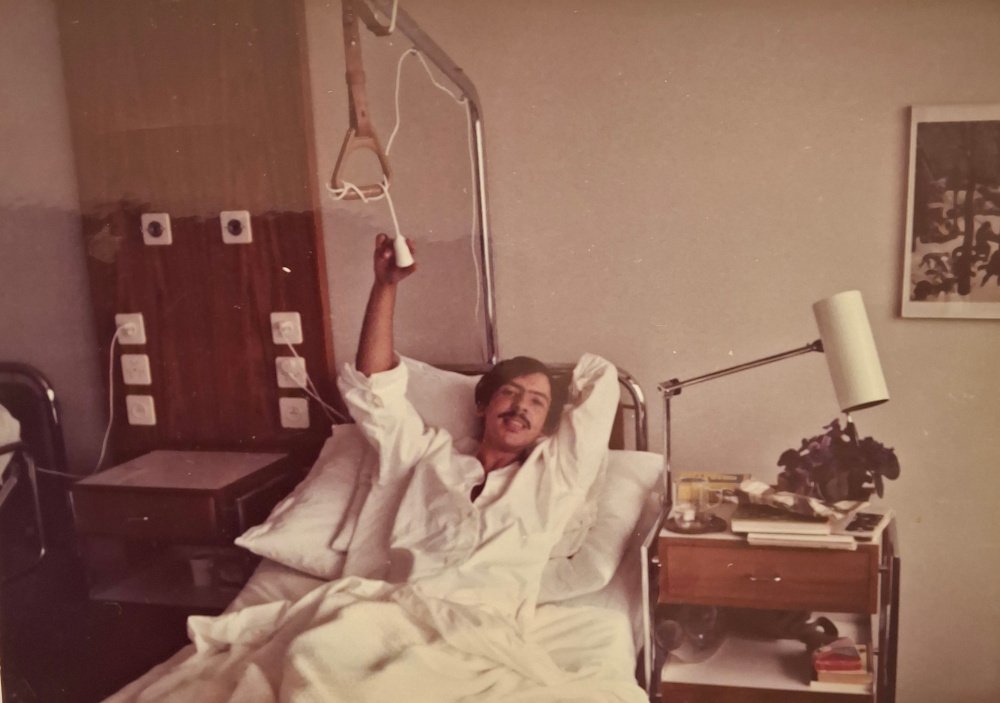
Now and then a bout of vertigo keeps me in bed for a day or two. As long as I lie still, keep my eyes shut, and don’t move my head, I feel fine, so that’s what I do, letting my mind fill with stray thoughts. Last week as I lay in such a state, memories of another time I was stuck in bed drifted into my mind. It was for a much longer period of time, in a hospital in Switzerland, when I was 21 or 22 years old, but like my recent experience, it entailed relatively little discomfort. As a diversion from what is going on around us now, I thought I’d reminisce about that hospital stay, what led up to it, and what followed.
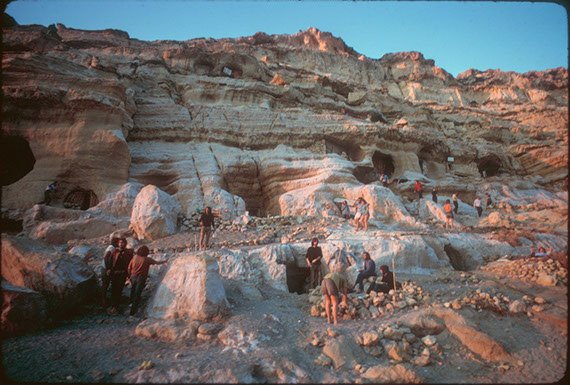
There are different places where I could begin, but a logical starting point is our escape from Israel. It wasn’t exactly an escape, but it felt a bit like one. After a year on a kibbutz and another in Jerusalem, I was more than ready to leave. For some time our theme song was the Animals’ We Gotta Get Outta This Place, and we wondered if we ever would. When my girlfriend and I sat on the deck of a boat bound for Greece, a wave of relief washed over us. Not long afterwards, we found ourselves in the storied (literally!) caves of Matala on the island of Crete, a gathering place for hippies that Joni Mitchell describes in the intro Carey, a song she wrote about her stay there, which, it appears, coincided with our own visit, although what I remember of the place is sitting in a dark cave watching strung-out hippies string together beaded rings. It shouldn’t have been the high point of our trip, but in a way it was.
We weren’t hippies but what you might call hippie-adjacent, feeling more comfortable around and akin to the longhairs than straight folk. Our vague travel plans reflected the hippie ethos. We knew that eventually we wanted to work our way up to Switzerland where friends of ours from kibbutz, a Swiss girl and American guy, would be getting married, but that was many months off. We planned to travel and see and experience as much as we could in the meantime, and with hardly any money in our pockets, hitchhiking and sleeping wherever we could find shelter was our basic strategy. I don’t remember much about where we traveled or for how long, but in Yugoslavia we realized we had a problem, and it wasn’t just because we had a hard time catching a ride since every car that passed was packed with people. Some of the joie de vivre had gone out of my life. At first I thought it was just fatigue. I’d lost my appetite, barely had the energy to stand up, and my eyes and skin were turning yellow.
Somehow we made it to a clinic—maybe in Skopje but I’m not sure—where, as we expected, the diagnosis was hepatitis. The courtyard of the gray and dismal hospital we were directed to was full of bathrobed patients, also gray in appearance, listlessly roaming about like wraiths in a graveyard, and I had a premonition that if I entered that place, I’d never emerge from it again. It didn’t help that no one on the premises could speak English or any other language I had a chance of communicating in. We weren’t about to go back to Israel, and the only person we knew in Europe was our Swiss friend. I don’t recall if we wired or phoned, but we managed to contact her and tell her our situation. By chance, she worked at a doctor’s office, and told us that if we could get to Switzerland, I could get treatment there. We boarded a train to Switzerland and enjoyed a quiet, comfortable ride until at a station further up north, the train was suddenly filled with a boisterous crowd of high-spirited teenagers, military recruits leaving home for the barracks. Raucous and maudlin, they sang loudly and swigged liquor, not allowing me to refuse the bottle when it was passed to me. Just what my ailing liver needed.
The hospital I was admitted to in Switzerland was new and had wonderful facilities, and everyone there seemed to speak at least a few languages. The head of internal medicine was incredibly friendly and helpful. He stopped by regularly to chat, sending in his wife, also a doctor, to bring me books and magazines. If not for them, I would have been on my own, since my girlfriend, having nothing to do in Switzerland, had returned to the US, and my Swiss friend had returned to Israel to be with her fiance. Aware of my stay in Israel, they even contacted the only Jewish family in town and got them pay me visits. Not for the first or last time in my life, I was incredibly lucky and privileged to be treated with great kindness by strangers. Nor was that the end of the favors they did for me. After my release from the hospital seven weeks after my admission, they got me a job babysitting a little girl in a nearby canton, and after that, a position as an orderly in a psychiatric hospital, which entitled me to a work permit.
After the babysitting gig, I worked for my friend’s father, who was a baker. He rose in the middle of the night to fire up a wood-burning oven beside the house and prepare the loaves and pastries which needed to be baked before the sun was up. Helping him out was hard work for me, still recovering my strength after weighing in at less than a hundred pounds at one point in my hospital stay, but the biggest problem was my diet. For the next year alcohol was prohibited and my intake of salt, high-fat foods and dairy products restricted while my liver healed. That complicated diet was too much for the baker and his wife, who weren’t thrilled to be hosting me in the first place. I don’t believe they were pleased that their daughter was getting married, either because the groom lived so far away or because he was Jewish. They were conservative, provincial folk, not very open-minded, and I could understand what drove their daughter to travel in the first place.
I got out of the hospital in time to attend the wedding, after which the couple returned to the kibbutz in Israel. A month or two later I got a letter from our Swiss friend saying that she left her husband and had fled the kibbutz with a Scottish guy. Nobody thought that she and the American guy were a good match. She was adventurous and bold and he was, well, pretty much the opposite. It amused me that she’d gotten together with a Scot, because a factor in our friendship was our fondness for the Incredible String Band. The two of them went off to travel the world, much as my girlfriend and I set out to do on our aborted trip, and over the years I heard from her from far-flung places like Goa and Kathmandu, her letters reading like travelogues. It’s been a while since I heard from her, and imagine them traveling on together, still finding new places to discover.
Meanwhile, I had settled into work at the psychiatric clinic. When you see those words, you may envision something like the place portrayed in One Flew Over the Cuckoo’s Nest, but it was nothing like that. It was a campus with many buildings, and it had the air of an estate rather than an institution. I worked first in a general ward. Early on, at the end of my workday, I was joined in the cafeteria by an attractive young woman about my age whose English was excellent, and we had one of those special conversations that you sometimes have with a stranger. I have no recollection of what we talked about, but at the end, when I asked where she worked, she smiled and said, “I don’t work here. I’m one of them.” Her response showed an unusual ability to comprehend how I would think of her, rather than how she thought of herself. I don’t know what her malady was, but she was a lot saner and smarter than many successful and respected people I’ve met running loose in the world. I’m fairly certain that if the inmates of a psych ward exchanged places with those controlling our government and lives right now, we wouldn’t be in any worse shape than we are.
Another person I met in that ward was a middle aged patient who was reading A Spy in the House of Love, a novel by Anaïs Nin. I was then an avid fan of Henry Miller, and although I hadn’t read anything by Nin, I knew a little about her. He told me he was manic-depressive, but like the girl I’d talked to, he was sensitive, articulate and perceptive. Some weeks later, after I had been transferred to the pharmacy, a nurse said something to me and pointed out the window. My mind was slow in processing the German words she spoke and I smiled as I looked at a bundle in front of the building opposite us, not understanding until a minute later that it was the body of my manic-depressive friend, who had jumped to his death. I still feel guilty and stupid about the grin on my face when I was first told, and have never dared touch that novel by Anaïs Nin.
The last place I worked at was a terminal ward for old women with dementia. One lady there had a tumor on her face the size of a baseball and another was catatonic, her only movement a constant rocking back and forth in her chair. It was there I held the hand of a patient as she breathed her last breath. Patients were treated well at that hospital—a magnitude of difference from what I saw years later when I worked as an orderly in a nursing home in the US—and I don’t recall any staff who were not caring and kind. A group of Tibetan healthcare workers were especially outstanding in their diligence and empathy. I remember thinking of them as existing on a higher spiritual plane, capable of thinking of others before themselves.
Such was my hospital experience in Switzerland, both as patient and orderly. I could have stayed and worked there longer, or taken advantage of an exceptional opportunity to work part-time and earn a nursing degree with free room and board and no tuition, but as the year drew to an end, I decided otherwise and celebrated the New Year in Brooklyn, reunited once again with my girlfriend.
March, 2026
(It is with some hesitation I end with this song of nostalgia, made notorious first by overplay at the time of its release and then by the infamous Christmas Eve execution of almost 200 “dissidents”, purportedly carried out by soldiers in Santa Claus costumes in the national football stadium, that was ordered by Francisco Macías Nguema, dictator of Equatorial Guinea, as amplifiers blasted out Mary Hopkin’s lament. Reading about the regime of this brutal lunatic puts me in mind of our own dear leader.)